Wawel Castle in Krakow: What to See, Tickets and Visitor Guide
July 10, 2026
Plan your visit to Wawel Castle in Krakow. Compare exhibitions, tickets, opening hours, Wawel Cathedral and free attractions.
July 10, 2026
Why Wawel Castle is one of Krakow’s most important attractions
Wawel Castle is one of the most visited landmarks in Krakow and an essential stop for anyone interested in Polish history, architecture and art. Rising above the Vistula River, Wawel Hill has been associated with Polish rulers, royal ceremonies and national identity for centuries.
The complex is much larger than the castle building itself. Wawel Hill includes Wawel Royal Castle, Wawel Cathedral, historic courtyards, defensive walls, archaeological remains, gardens and the legendary Dragon’s Den.
For centuries, Wawel was the political and religious centre of the Polish monarchy. Kings lived in the Castle, while coronations, royal funerals and other major ceremonies took place in the Cathedral. Today, the collections of Wawel Royal Castle are displayed across several permanent exhibitions reflecting different aspects of royal life, art, military history and the development of the hill.
The number of available routes can make planning your first visit confusing. You do not need to see every exhibition. The key is to understand what each one contains and choose the parts of Wawel that best match your interests.
Explore Wawel Castle in Krakow from the outside and understand its history, architecture, and royal significance during a relaxed self-guided walk with a professional audio guide. This tour focuses on Wawel Hill and the castle grounds, offering clear historical context before visiting the castle interiors or booking Wawel Castle tickets.
Once the former residence of Polish kings, Wawel Castle remains one of the most important landmarks in Poland. This audio tour helps you experience the site with deeper understanding – without rushing, crowds, or fixed schedules – making it an ideal introduction to any Wawel Castle visit.
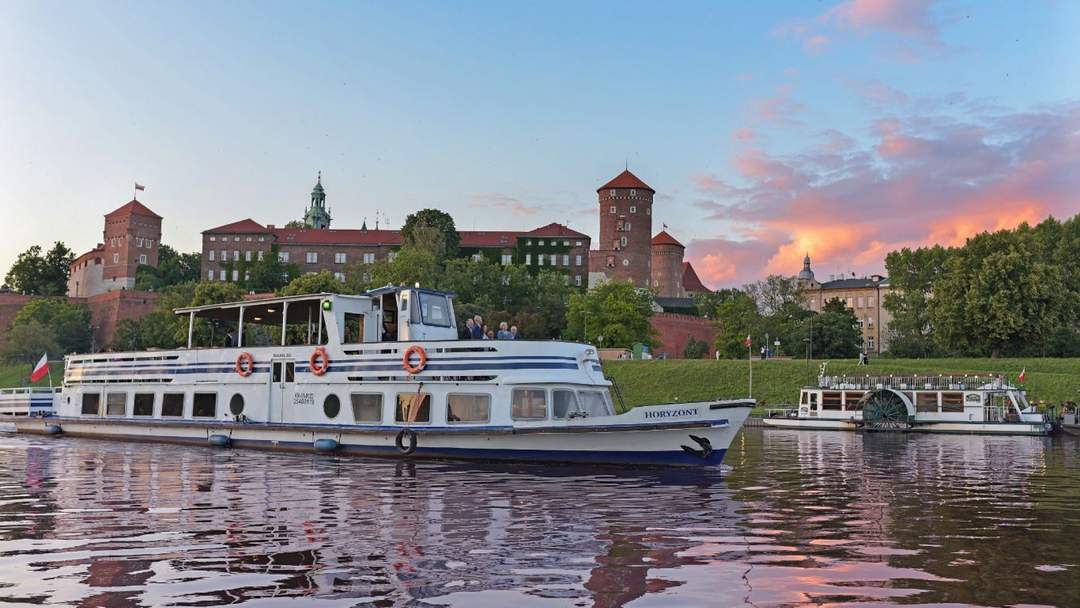
Enjoy a scenic Vistula River cruise in Krakow departing from the foot of Wawel Hill. Admire panoramic views of the Royal Castle, Kazimierz and historic bridges from the deck of a comfortable boat, while a professional audio guide brings the city’s story to life. One of the most relaxing and picturesque ways to experience Krakow from the water.
Duration: 1h - 2hAudio GuideTransportation included
Explore Krakow in a fast, comfortable, and eco-friendly way with a Krakow City Tour by electric golf cart. This sightseeing tour is a great introduction to the city, especially for first-time visitors or travellers with limited time who want to see the highlights without long walks.
During the ride, you will explore key areas of Krakow, including the Old Town surroundings, Kazimierz – the historic Jewish district, and parts of Podgórze, where the famous Schindler’s Factory was located. A professionally prepared audio guide provides historical context and helps you understand the city’s past and character.
This electric car tour allows you to see more in less time while staying comfortable in all weather conditions, making it an easy and practical way to start exploring Krakow.
Duration: 1h - 2hAudio GuideTransportation included
The State Rooms, Crown Treasury and Wawel Cathedral
Can you visit Wawel without entering the museums?
Yes. The main outdoor areas and courtyards can be explored without an exhibition ticket
Is Wawel Cathedral part of the Castle exhibition route?
No. The Cathedral is visited separately
Is Wawel suitable for children?
Yes, especially Dragon’s Den, the Armoury and the dragon statue
How much time should you allow?
Around 2 hours for a short visit or half a day for the main highlights
How visiting Wawel works
The term Wawel Castle is often used for the entire attraction, but Wawel is a complex made up of several different areas.
The outdoor parts of Wawel Hill include the main courtyards, exterior architecture and viewpoints. You can explore these without entering the paid museum exhibitions.
Inside Wawel Royal Castle, the collections are divided into separate routes. The main options include the State Rooms, Royal Private Apartments, Crown Treasury, Armoury and underground exhibitions. Rather than following one fixed route through the entire Castle, visitors choose the exhibitions they want to see.
Wawel Cathedral is a separate part of the complex with its own entrance and visitor route. It should not be treated as a secondary attraction. Alongside the State Rooms and Crown Treasury, it is one of the most important parts of a first visit.
Some outdoor and underground attractions are seasonal. Current availability, admission arrangements and temporary closures should always be checked shortly before visiting.
What to see at Wawel Castle
Each Wawel exhibition focuses on a different part of the site’s history. Some concentrate on royal interiors and art, while others explore the monarchy, military collections, archaeology or Krakow’s most famous legend.
State Rooms
The State Rooms, located on the Castle’s second floor, are the best introduction to Wawel Royal Castle for most first-time visitors.
These were the ceremonial interiors of the royal residence. They were used for audiences, court events, official meetings and other occasions connected with the public life of the monarchy.
The route includes some of the Castle’s most impressive rooms, historic furnishings, paintings and decorative art. Its greatest treasures include tapestries commissioned by King Sigismund II Augustus. The collection is one of the most important surviving reminders of the cultural ambitions of the Jagiellonian court.
Another highlight is the Hall of Deputies, traditionally known as the Hall of Heads because of the carved human heads placed in its coffered ceiling.
The second-floor route also presents Wawel’s collection of Ottoman Turkish tents. Because individual objects may occasionally be removed for conservation, the exact display can vary.
Best for: first-time visitors, royal interiors, Renaissance art and visitors who want to see the Castle’s most representative rooms.
Crown Treasury
The Crown Treasury focuses on the symbols, ceremonies and material heritage of the Polish monarchy.
Its best-known object is Szczerbiec, the medieval coronation sword used during the coronations of Polish kings. It is one of the most important surviving objects connected with the former Crown Treasury and Polish royal ceremonial.
The exhibition also includes precious metalwork, ceremonial weapons, royal keepsakes and objects connected with Polish military and political history. Rather than recreating a furnished palace, the Treasury presents carefully selected individual artefacts and explains their historical significance.
This is a particularly good choice for visitors who want to understand how power and monarchy were represented through symbolic objects.
Best for: Polish royal history, ceremonial objects, important historical artefacts and visitors with limited time.
Wawel Cathedral
Wawel Cathedral is one of the most historically significant churches in Poland. It was the setting for royal coronations, funerals and major state ceremonies, and it remains closely associated with the history of Polish rulers.
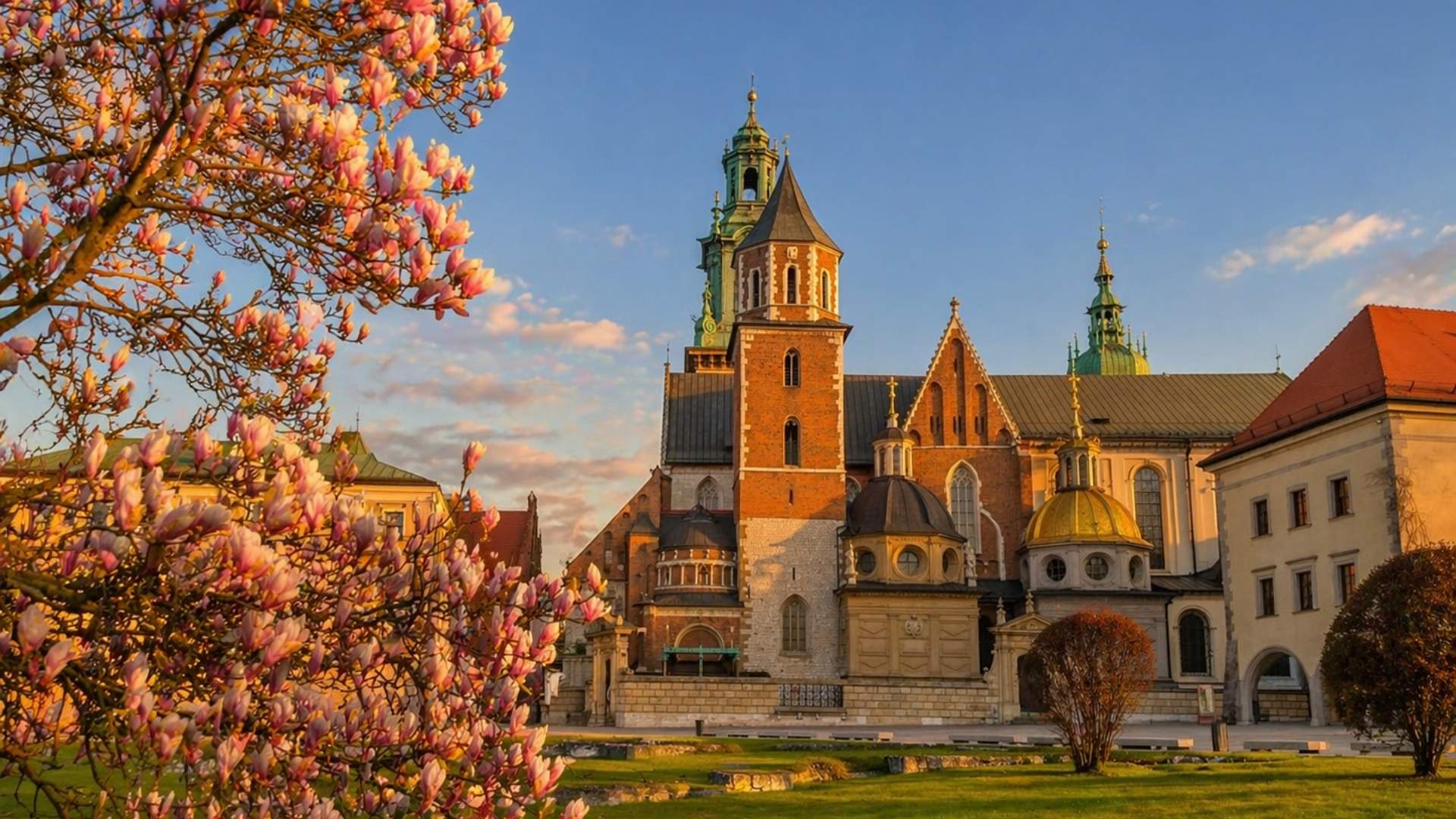
The Cathedral’s architecture reflects several historical periods. Its Gothic main structure is surrounded by chapels built and altered over centuries. The most recognisable is the gold-domed Sigismund Chapel, one of the finest examples of Renaissance architecture in Poland.
A visitor route can include the Cathedral interior, Royal Tombs, Sigismund Bell and museum collections.
The Royal Tombs
The crypts beneath the Cathedral contain the tombs of Polish kings, queens, national heroes and other important historical figures.
They add a personal dimension to the history presented in the Castle. The royal chambers show how monarchs lived and ruled, while the crypts reveal how they were remembered after death.
Sigismund Bell
Sigismund Bell is one of the most famous historic bells in Poland. It is rung on selected religious and national occasions.
Reaching it requires climbing steep, narrow wooden stairs inside the tower. This section may not be suitable for visitors with limited mobility, difficulty using stairs or severe discomfort in confined spaces.
The Cathedral chapels
The chapels surrounding the Cathedral contain royal tombs, altars, sculptures and works representing different periods of European art.
Even visitors who are not primarily interested in religious architecture can appreciate how the building brings together the political, artistic and spiritual history of the Polish monarchy.
Best for: royal history, religious architecture, royal tombs and understanding Wawel’s role in Polish national ceremonies.
Royal Private Apartments
The Royal Private Apartments occupy the first floor of the Castle and show a more personal side of court life.
While the State Rooms were designed for official ceremonies and public representation, the private apartments were connected with the everyday lives of monarchs, their families and members of the court.
The interiors contain paintings, furniture, tapestries and decorative objects. They are generally more intimate than the grand halls on the second floor and provide a useful contrast to the ceremonial character of the State Rooms.
The first-floor route also includes the Porcelain Cabinet and the Wawel Recovered exhibition. Wawel Recovered explains what happened to the hill after Poland lost its independence, how the Austrian military used the complex and how Wawel was eventually restored as a national monument.
Best for: historic interiors, decorative arts, everyday court life and return visitors who have already seen the State Rooms.
The Armoury
The Armoury presents weapons and military equipment from different periods.
Its collections include swords, sabres, firearms, armour, helmets and ceremonial weapons. Some objects were designed for combat, while others demonstrated the status, wealth or authority of their owners.
The exhibition offers a different experience from the furnished Castle interiors. It is often a good option for visitors who prefer military history to paintings and decorative art.
It can also be one of the more engaging indoor routes for older children and teenagers.
Best for: military history, arms and armour, teenagers and families seeking an alternative to royal interiors.
Wawel Underground
The underground areas of Wawel reveal the archaeological and architectural layers hidden beneath the present-day complex.
Depending on the selected route and current availability, visitors may encounter archaeological remains, fragments of earlier buildings, historic stonework and evidence of how the hill’s fortifications developed.
The Lost Wawel
The Lost Wawel focuses on the buildings that existed on the hill before the present Renaissance residence took shape.
Models, archaeological discoveries and surviving architectural fragments help visitors imagine the earlier medieval complex. This exhibition is particularly useful for understanding that Wawel developed gradually rather than being designed as one complete structure.
The Lapidarium
The Lapidarium displays historic stone fragments and architectural details associated with different phases of Wawel’s development.
It will appeal most to visitors interested in architecture, conservation and the physical evidence left behind by successive reconstructions.
Between the Walls
Between the Walls is an underground archaeological and architectural exhibition located within the former defensive system of Wawel Hill.
The route reveals ramparts and structures dating from different periods, showing how the hill’s defences changed over the centuries.
Best for: archaeology, medieval architecture, fortifications and visitors who want to explore beyond the royal collections.
Dragon’s Den and the Wawel Dragon
Dragon’s Den is a limestone cave beneath Wawel Hill. According to Krakow’s best-known legend, it was once inhabited by a dragon that terrorised the city.
Visitors descend from the hill through the cave and emerge beside the Vistula River. Nearby stands the famous metal statue of the Wawel Dragon, which regularly breathes fire.
The attraction is more closely connected with Krakow’s legends than with royal history, but it provides a lively contrast to the museum interiors. The stairs and narrow passages mean that it is not suitable for everyone.
Dragon’s Den is seasonal, so its availability should be checked before planning a visit.
Best for: families, legends, shorter visits and anyone looking for a less formal experience.
Explore Wawel Castle in Krakow from the outside and understand its history, architecture, and royal significance during a relaxed self-guided walk with a professional audio guide. This tour focuses on Wawel Hill and the castle grounds, offering clear historical context before visiting the castle interiors or booking Wawel Castle tickets.
Once the former residence of Polish kings, Wawel Castle remains one of the most important landmarks in Poland. This audio tour helps you experience the site with deeper understanding – without rushing, crowds, or fixed schedules – making it an ideal introduction to any Wawel Castle visit.
Enjoy a scenic Vistula River cruise in Krakow departing from the foot of Wawel Hill. Admire panoramic views of the Royal Castle, Kazimierz and historic bridges from the deck of a comfortable boat, while a professional audio guide brings the city’s story to life. One of the most relaxing and picturesque ways to experience Krakow from the water.
Duration: 1h - 2hAudio GuideTransportation included
Explore Krakow in a fast, comfortable, and eco-friendly way with a Krakow City Tour by electric golf cart. This sightseeing tour is a great introduction to the city, especially for first-time visitors or travellers with limited time who want to see the highlights without long walks.
During the ride, you will explore key areas of Krakow, including the Old Town surroundings, Kazimierz – the historic Jewish district, and parts of Podgórze, where the famous Schindler’s Factory was located. A professionally prepared audio guide provides historical context and helps you understand the city’s past and character.
This electric car tour allows you to see more in less time while staying comfortable in all weather conditions, making it an easy and practical way to start exploring Krakow.
Duration: 1h - 2hAudio GuideTransportation included
The Royal Gardens recreate part of the garden environment associated with the Renaissance residence.
Their formal planting, pathways and quieter atmosphere provide a break from the Castle interiors. They also allow visitors to view the architecture from a different perspective.
Other seasonal routes may include viewing points or selected outdoor and underground areas. Because their availability can change, they are best treated as additions to the main Castle and Cathedral visit rather than its foundation.
Best for: architecture, outdoor spaces, photography and visitors exploring Wawel during the warmer months.
Which Wawel attractions should you choose?
There is no need to see every exhibition during one visit. Choose according to your interests and the amount of time available.
Type of visit
Recommended attractions
First visit
State Rooms + Crown Treasury + Wawel Cathedral
Limited time
State Rooms + walk around Wawel Hill
Polish royal history
Crown Treasury + Wawel Cathedral
Art and historic interiors
State Rooms + Royal Private Apartments
Archaeology and medieval history
Wawel Underground
Military history
The Armoury
Visit with children
Dragon’s Den + Armoury + dragon statue
Return visit
Royal Private Apartments + Wawel Underground
Outdoor visit
Courtyards + viewpoints + Wawel Hill audio guide
For the most complete first impression, combine the State Rooms, Crown Treasury and Wawel Cathedral. Together, they represent the royal residence, the symbols of monarchy and the religious centre connected with Polish rulers.
What can you see at Wawel for free?
You do not need to enter a museum exhibition to appreciate Wawel Hill.
A walk through the outdoor parts of the complex allows you to see:
the Outer Courtyard;
the Renaissance Arcaded Courtyard;
the exterior of Wawel Royal Castle;
the exterior of Wawel Cathedral;
the golden dome of Sigismund Chapel;
parts of the defensive architecture;
views over the Vistula River;
the Wawel Dragon statue below the hill.
The Arcaded Courtyard is one of the most distinctive examples of Renaissance architecture in Krakow. Its open galleries and proportions reflect the transformation of Wawel into a royal residence inspired by Italian Renaissance design.
The outdoor areas also reveal how many architectural periods coexist on the hill. Gothic walls, Renaissance arcades, later towers and cathedral chapels form a complex that developed over many centuries.
Explore Wawel Hill with an audio guide
Many visitors walk through the courtyards without knowing what the individual buildings, towers and architectural details represent.
The Wawel Hill Audio Guide provides historical context while you explore the free-access parts of the complex at your own pace. It focuses on Wawel Hill, the surroundings of the Royal Castle, its architecture, history and legends.
The route does not include admission to the exhibitions inside Wawel Royal Castle or Wawel Cathedral. It is designed as an introduction or complement to the interior routes, not as a replacement for them.
How much time should you spend at Wawel?
The right amount of time depends on whether you want a short introduction or a detailed museum visit.
Around 2 hours
With approximately two hours, walk around Wawel Hill and choose one principal attraction.
The State Rooms are the best indoor option for most first-time visitors. Alternatively, choose Wawel Cathedral if coronations, royal tombs and religious architecture interest you more than palace interiors.
Do not try to combine several museum routes in this amount of time.
Half a day
Half a day allows you to see the main highlights without rushing.
A balanced first visit includes:
a walk through the courtyards;
the State Rooms;
the Crown Treasury;
Wawel Cathedral.
This combination presents the three central aspects of Wawel: royal life, the symbols of monarchy and the ceremonial role of the Cathedral.
A full day
A full day allows you to add one or two specialist exhibitions.
After visiting the State Rooms, Treasury and Cathedral, choose according to your interests:
Royal Private Apartments for historic interiors;
Wawel Underground for archaeology;
the Armoury for military history;
Dragon’s Den or the Gardens for a seasonal outdoor experience.
Plan a break between routes. Several hours of uninterrupted museum visiting can become tiring even for travellers with a strong interest in history.
Visiting Wawel with children
Wawel can work very well as a family attraction, but a full programme of royal interiors may be difficult for younger children.
A better approach is to combine one indoor exhibition with something more active or story-based.
Good choices include:
Dragon’s Den;
the fire-breathing dragon statue;
the Armoury;
the Castle courtyards;
the Royal Gardens;
a walk around the defensive walls.
Before arriving, introduce children to the Wawel Dragon legend. The cave, hill and dragon statue will then feel like parts of one story rather than unrelated attractions.
For older children interested in knights and weapons, the Armoury may be more engaging than another route through furnished rooms.
Useful information before your visit
Check current visitor information
We intentionally do not list prices or opening hours because they can vary by season, exhibition and day.
Before visiting, check the official Wawel Royal Castle website for current exhibitions, admission options, temporary closures and seasonal routes.
Deciding in advance whether you prefer royal interiors, archaeology, military collections or the Cathedral will make the visit easier.
During busy periods, admission to popular exhibitions may be limited. Selecting your priorities beforehand reduces the risk of spending too much time deciding on site.
Expect different entrances
The Castle exhibitions and Cathedral do not form one continuous museum route. Allow time to move between entrances and, where necessary, obtain separate admission.
Travel light
Large bags, backpacks, pushchairs and umbrellas may not be permitted inside some exhibition areas. Storage options and current visitor regulations should be checked before arrival, particularly when travelling with luggage.
Explore Wawel Castle in Krakow from the outside and understand its history, architecture, and royal significance during a relaxed self-guided walk with a professional audio guide. This tour focuses on Wawel Hill and the castle grounds, offering clear historical context before visiting the castle interiors or booking Wawel Castle tickets.
Once the former residence of Polish kings, Wawel Castle remains one of the most important landmarks in Poland. This audio tour helps you experience the site with deeper understanding – without rushing, crowds, or fixed schedules – making it an ideal introduction to any Wawel Castle visit.
Enjoy a scenic Vistula River cruise in Krakow departing from the foot of Wawel Hill. Admire panoramic views of the Royal Castle, Kazimierz and historic bridges from the deck of a comfortable boat, while a professional audio guide brings the city’s story to life. One of the most relaxing and picturesque ways to experience Krakow from the water.
Duration: 1h - 2hAudio GuideTransportation included
Explore Krakow in a fast, comfortable, and eco-friendly way with a Krakow City Tour by electric golf cart. This sightseeing tour is a great introduction to the city, especially for first-time visitors or travellers with limited time who want to see the highlights without long walks.
During the ride, you will explore key areas of Krakow, including the Old Town surroundings, Kazimierz – the historic Jewish district, and parts of Podgórze, where the famous Schindler’s Factory was located. A professionally prepared audio guide provides historical context and helps you understand the city’s past and character.
This electric car tour allows you to see more in less time while staying comfortable in all weather conditions, making it an easy and practical way to start exploring Krakow.
Duration: 1h - 2hAudio GuideTransportation included
A visit may involve cobbled surfaces, slopes, stairs and long periods of standing. Dragon’s Den, Sigismund Bell and some underground routes include narrow or uneven passages.
Check accessibility for your chosen route
Accessibility differs between exhibitions. Some Castle interiors can be reached using lifts or platforms, while towers, caves and parts of the underground routes require stairs.
Visitors with limited mobility should verify the accessibility of specific routes rather than relying on general information for the whole complex.
A short history of Wawel Castle
Wawel Hill was an important centre of power long before the present Castle was built.
During the Middle Ages, it developed into the principal seat of Polish rulers. The hill contained royal residences, churches, defensive structures and buildings serving the court.
The Castle’s most important transformation took place during the Renaissance. Under the Jagiellonian dynasty, the earlier Gothic residence was rebuilt as an impressive palace arranged around the Arcaded Courtyard.
The interiors were decorated with works reflecting the status and cultural ambitions of the monarchy. The tapestries commissioned by Sigismund II Augustus remain among the most important surviving treasures from this period.
After the centre of political life shifted towards Warsaw, Wawel gradually lost its role as the main royal residence. The complex suffered during wars, fires and periods of occupation.
Following the partitions of Poland, the Austrian authorities converted Wawel into a military citadel and barracks. This significantly altered the character of the hill.
In the late 19th and early 20th centuries, efforts began to recover and restore Wawel. The project became a national undertaking supported by people from across the divided Polish territories.
Today, Wawel combines museum, religious and commemorative functions. It remains both a major visitor attraction and one of the most powerful symbols of Polish history.
Wawel and Krakow’s Royal Route
Wawel is the monumental final point of Krakow’s historic Royal Route.
The route begins near St Florian’s Gate and continues along Floriańska Street, through the Main Market Square and down Grodzka Street towards Wawel Hill.
Royal entries, coronation processions, funerals and visits by important dignitaries followed this ceremonial path through the city. Reaching Wawel marked the transition from Krakow’s public streets to the political and religious centre of the monarchy.
Walking at least part of the Royal Route before visiting Wawel provides useful historical context and connects the Castle with the wider development of Krakow.
The main outdoor areas and courtyards can be explored without purchasing an exhibition ticket. Admission is required for the Castle exhibitions, the Cathedral visitor route and selected seasonal attractions.
Is Wawel Castle the same as Krakow Castle?
International visitors sometimes use the name “Krakow Castle” when referring to Wawel. The proper name is Wawel Royal Castle, located on Wawel Hill near Krakow’s Old Town.
What should I see on my first visit?
The best introduction consists of the State Rooms, Crown Treasury and Wawel Cathedral. Together, they explain the residential, political and ceremonial importance of Wawel.
Is Wawel Cathedral included in a Castle visit?
Wawel Cathedral is located within the same historic complex but is managed and visited separately from Wawel Royal Castle.
How long should I spend at Wawel?
Allow around two hours for the outdoor hill and one selected interior. A half-day visit is more suitable for the State Rooms, Crown Treasury, Cathedral and courtyards.
Is Wawel suitable for children?
Yes. Dragon’s Den, the Armoury, the outdoor courtyards and the fire-breathing dragon statue are particularly suitable for families. Avoid scheduling too many indoor routes during one visit.
Where should I check Wawel Castle tickets and opening hours?
Use the official websites of Wawel Royal Castle and Wawel Cathedral. They provide current admission information, opening arrangements, seasonal availability and temporary closure notices.
Explore Wawel Castle in Krakow from the outside and understand its history, architecture, and royal significance during a relaxed self-guided walk with a professional audio guide. This tour focuses on Wawel Hill and the castle grounds, offering clear historical context before visiting the castle interiors or booking Wawel Castle tickets.
Once the former residence of Polish kings, Wawel Castle remains one of the most important landmarks in Poland. This audio tour helps you experience the site with deeper understanding – without rushing, crowds, or fixed schedules – making it an ideal introduction to any Wawel Castle visit.
Enjoy a scenic Vistula River cruise in Krakow departing from the foot of Wawel Hill. Admire panoramic views of the Royal Castle, Kazimierz and historic bridges from the deck of a comfortable boat, while a professional audio guide brings the city’s story to life. One of the most relaxing and picturesque ways to experience Krakow from the water.
Duration: 1h - 2hAudio GuideTransportation included
Explore Krakow in a fast, comfortable, and eco-friendly way with a Krakow City Tour by electric golf cart. This sightseeing tour is a great introduction to the city, especially for first-time visitors or travellers with limited time who want to see the highlights without long walks.
During the ride, you will explore key areas of Krakow, including the Old Town surroundings, Kazimierz – the historic Jewish district, and parts of Podgórze, where the famous Schindler’s Factory was located. A professionally prepared audio guide provides historical context and helps you understand the city’s past and character.
This electric car tour allows you to see more in less time while staying comfortable in all weather conditions, making it an easy and practical way to start exploring Krakow.
Duration: 1h - 2hAudio GuideTransportation included
Wawel is much more than a former royal residence. It combines palace interiors, national treasures, royal tombs, religious architecture, archaeology, defensive structures and Krakow’s most famous legend in one historic setting.
First-time visitors should focus on the State Rooms, Crown Treasury and Wawel Cathedral, while returning visitors can explore the private apartments, underground exhibitions or military collections.
The best visit is not necessarily the one that includes the largest number of exhibitions. Choose the parts of Wawel that match your interests, leave time for the courtyards and experience the hill as a complete historic complex rather than a sequence of museum rooms.
Explore Wawel Castle in Krakow from the outside and understand its history, architecture, and royal significance during a relaxed self-guided walk with a professional audio guide. This tour focuses on Wawel Hill and the castle grounds, offering clear historical context before visiting the castle interiors or booking Wawel Castle tickets.
Once the former residence of Polish kings, Wawel Castle remains one of the most important landmarks in Poland. This audio tour helps you experience the site with deeper understanding – without rushing, crowds, or fixed schedules – making it an ideal introduction to any Wawel Castle visit.
Enjoy a scenic Vistula River cruise in Krakow departing from the foot of Wawel Hill. Admire panoramic views of the Royal Castle, Kazimierz and historic bridges from the deck of a comfortable boat, while a professional audio guide brings the city’s story to life. One of the most relaxing and picturesque ways to experience Krakow from the water.
Duration: 1h - 2hAudio GuideTransportation included










 Duration: 2h
 Audio Guide
 Transportation included