Walking Through History: Oskar Schindler and His Factory in Krakow
May 30, 2025
Learn the incredible story of Oskar Schindler, visit his factory in Krakow, and discover the impact of Schindler’s List. Plan your visit and explore more.
May 30, 2025
The History of Oskar Schindler and His Factory in Krakow
This is no ordinary museum. A visit to Oskar Schindler’s Factory in Krakow is a journey through one of the darkest yet most moving chapters of the 20th century. If you want to truly connect with history during your time in Krakow, this place should be on your list.
Who Was Oskar Schindler?
Oskar Schindler didn’t immediately go down in history as a hero. He was born on April 28, 1908, in Zwittau, a small town in what is now the Czech Republic, into a family of German industrialists. His childhood was stable but far from luxurious — his father ran a mid-sized agricultural machinery factory.
Even as a young boy, Schindler showed a love for the finer things in life. He was fascinated by fast cars, fashionable clothes, and a lively social scene. However, he didn’t have the fortune needed to fulfill those ambitions. He came of age during tough times — the Great Depression of the 1930s further limited his chances of success.
He tried his hand at various jobs — from working in the family business to selling farm equipment — but without much success. In 1936, seeking financial stability, he was recruited by the Abwehr, the German military intelligence service. Schindler operated mainly in Czechoslovakia, gathering economic and military information about infrastructure, railways, and factories. In 1938, he was arrested for espionage but was released following political changes — after the Munich Agreement, Germany annexed the Sudetenland, and political prisoners were freed. Not long after, he joined the Nazi Party, driven more by pragmatism than ideology.
In 1939, after the invasion of Poland, he took over a factory in Krakow — the Deutsche Emailwarenfabrik (DEF). Initially, it was an excellent opportunity to profit under the new wartime conditions: military contracts and cheap Jewish labor. Schindler lived the life he had always wanted — lavishly, surrounded by influential people.
Oskar Schindler’s Private Life
Beyond his public story, Schindler’s private life was complex and often turbulent. He married Emilie Pelzl in 1928, and although their relationship faced many challenges, Emilie stood by him through the war. She played a crucial role in supporting Schindler’s efforts — running the kitchen at the Brünnlitz factory and helping to procure food and medicine for the workers.
Despite their shared struggles, the marriage was strained, especially due to Schindler’s numerous affairs. After the war, the couple lived separately; Emilie remained in Argentina, while Schindler returned to Germany. They never divorced but lived apart for the rest of their lives.
Schindler had no children, and although rumors about illegitimate offspring circulated over the years, none were ever confirmed. His private life, marked by imperfections and contradictions, only deepens the impact of his wartime actions. Oskar Schindler was not a flawless hero, but a deeply human figure who, when it mattered most, chose compassion over self-interest.
Oskar Schindler in a photograph taken sometime after the end of World War II. Public domain image.
Schindler’s Transformation
War changes people. As Schindler witnessed the brutality of the Nazi regime toward the Jewish population daily, he began to change. From a cynical businessman, he transformed into a man who realized that his factory could be a lifeline for many.
Watching executions, deportations, and the liquidation of the Krakow Ghetto, Schindler made a decision to use his influence and wealth not for personal gain, but to save lives. He protected his Jewish workers from deportation, paid for their employment through the occupying authorities, and out of his own pocket, provided extra food and medicine.
Gradually, his life shifted direction. No longer were luxury and wealth his goals — now, it was the survival of those who depended on him.
What Was It Like to Work in Schindler’s Factory?
At the factory on Lipowa Street, workers were officially classified as prisoners and received no wages. Schindler had to pay the authorities for each worker to employ them legally and protect them from deportation.
But he didn’t stop there. He organized extra food rations, sourced clothing and medicine, and worked to create the most humane working conditions possible. He shielded his workers from arbitrary violence and ensured that their tasks were less brutal than those in other forced labor camps.
Schindler wasn’t just employing people — he was saving them. His factory became a sanctuary in a world where death was ever-present.
Avoid the queues and visit the original Schindler’s Factory Museum – one of Krakow’s most important historical sites.With this fast-track ticket, you’ll explore the powerful permanent exhibition Krakow under Nazi Occupation 1939–1945, located in the real factory where Oskar Schindler worked.Discover original rooms, multimedia installations, and the story behind Schindler’s List – all at your own pace.
Step inside Oskar Schindler’s Enamel Factory in Krakow and explore the city’s history during World War II on a guided visit with a licensed guide. During the tour, you will learn about everyday life in occupied Krakow, the tragedy of the Krakow Ghetto, and the true story of a man who saved more than a thousand lives. The presence of a guide allows you to immerse yourself more deeply in the exhibition and better understand the broader historical context and the human stories behind the events.
Duration: 2hLive guideSkip-theLineTransportation included
Book a private airport transfer in Krakow and travel comfortably between the city and Krakow John Paul II International Airport (Balice). This door-to-door service offers a reliable and stress-free connection with fixed pricing, flight monitoring, and a private vehicle adjusted to the number of passengers and luggage. A convenient solution for arrivals and departures in Krakow.
Discover the rich history and cultural heritage of the Jewish Quarter of Krakow with a carefully prepared audio guide for independent sightseeing. This self-guided walking tour takes you through Kazimierz – the historic Jewish district – allowing you to explore its streets, stories and atmosphere at your own pace.
Kazimierz lies just a short walk from Krakow’s Old Town and is a place where the city’s past and present meet. Through narration and historical context, the audio guide introduces the history of the Jewish community, their contribution to the city, and the lasting impact of World War II on this remarkable district.
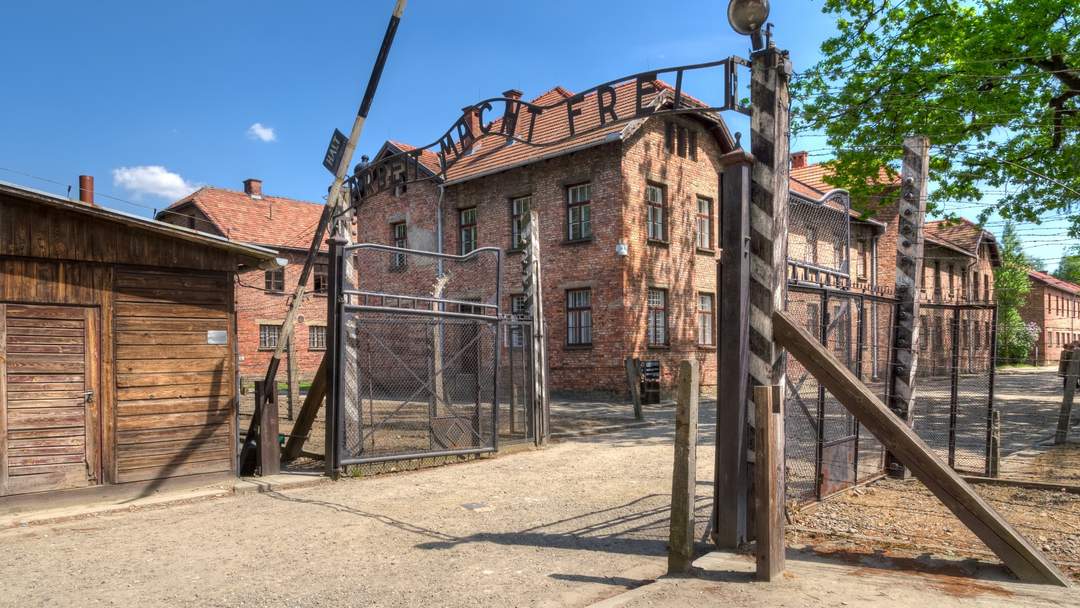
Walk in the footsteps of history on a professionally guided visit to Auschwitz-Birkenau – one of the most important memorial sites in the world. Departing from Krakow, this all-inclusive tour offers powerful insight, respectful reflection, and seamless logistics, so you can focus on what truly matters. Led by a licensed guide, you'll visit both Auschwitz I and Auschwitz II-Birkenau and return with a deeper understanding of the past. Whether travelling solo or with others, this tour is trusted by thousands every year for its emotional impact and flawless organisation.
Duration: 7hLive guideSkip-theLineTransportation included
By late 1944, the situation had become dire. The Nazis were liquidating labor camps, and deportation to Auschwitz meant almost certain death. Schindler knew that if he didn’t act immediately, his workers would be lost.
Schindler’s List was not just a set of names. To save his people, he had to present them as essential to the German war effort. The list was created in close cooperation with trusted associates and involved not just paperwork but a grueling process of negotiations, bribes, and document manipulation. Schindler risked his own life, carefully crafting the list so that each person appeared indispensable to production.
Not everyone on the list was a skilled worker. Many had no industrial experience at all. But for Schindler, that didn’t matter. What mattered was saving as many lives as possible. Each name was a hope, each line on the paper a step toward survival.
To Nazi officials, only numbers, signatures, and bureaucratic formality mattered. To Schindler, it was about people. The list was a shield he patiently and resolutely built, knowing that even the slightest mistake could cost not just his workers’ lives but his own.
Once the list was finalized, a dramatic process of transport to a new factory in Brünnlitz began. There were harrowing moments — a transport of women was mistakenly sent to Auschwitz. Schindler didn’t hesitate. He immediately used all his contacts and resources to negotiate their release. Within days, they were freed — saved, like hundreds of others.
Schindler’s List saved over 1,200 people. It wasn’t just a document — it was a testament to courage, ingenuity, and humanity in a time when humanity was in short supply.
Life and Work in Brünnlitz
The new factory in Brünnlitz operated under harsher conditions. It was surrounded by barbed wire and strictly controlled by the SS. Food was scarce, and there was a lack of medicine and clothing. Yet Schindler continued doing everything he could to help his people survive.
He spent his own money to procure food on the black market and to obtain medicines and clothing. Although the factory nominally produced munitions, not a single functional shell was ever completed — the production was intentionally sabotaged.
Thanks to his efforts, the vast majority of those on Schindler’s List survived the war. It was an extraordinary achievement at a time when death was everywhere.
Oskar Schindler After the War
After the war, Oskar Schindler never regained his former status or found the stability he once sought. He initially emigrated to Argentina, attempting to run a farm, but the venture soon failed. He returned to Germany, living modestly, often relying on financial support from the Schindlerjuden — the people he had saved.
Despite saving over a thousand lives, Schindler remained almost forgotten in the post-war world. He never sought fame or recognition, nor did he profit from his heroism. He lived quietly and modestly, sometimes in poverty.
In 1963, the State of Israel honored him with the title Righteous Among the Nations — the highest award given to non-Jews for saving Jews during the Holocaust. Schindler was one of the first Germans to receive this honor. As a further tribute, he was invited to plant a tree in the Avenue of the Righteous at Yad Vashem in Jerusalem.
Schindler died in 1974 in Hildesheim, Germany. According to his last wishes, he was buried in Jerusalem, on the Catholic cemetery on Mount Zion — in the city that had become home to many he had saved. His grave bears a simple inscription: “Whoever saves one life, saves the entire world.”
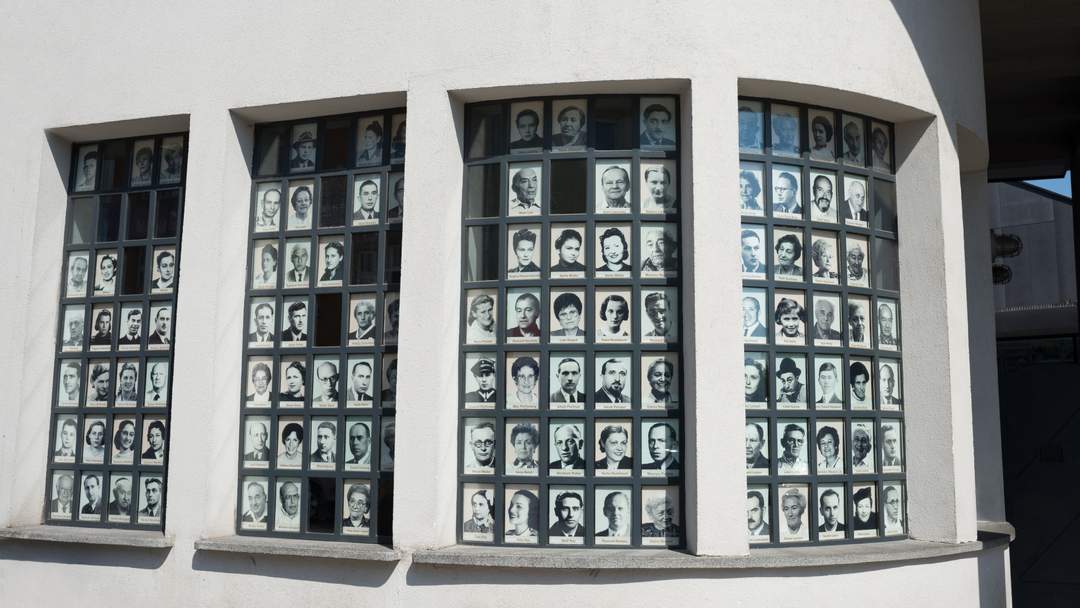
The original factory building, now preserved and transformed into part of the museum’s interior, offering visitors a glimpse into history.
The Film Schindler’s List
Oskar Schindler’s story was brought to global attention in 1993 by Steven Spielberg’s film Schindler’s List. The film won seven Academy Awards and remains one of the most powerful cinematic portrayals of the Holocaust.
Through Schindler’s story, Spielberg captured his profound transformation — from a cynical businessman to a man willing to risk everything to save others. Much of the film was shot on location in Krakow, and its rawness and authenticity continue to leave a lasting impression on audiences.
Today, the buildings of the former factory at 4 Lipowa Street house a museum that immerses visitors in the history of Krakow under Nazi occupation. The exhibition guides visitors through the daily life of the city during the war, the story of the ghetto, the Holocaust, and Schindler’s courageous actions.
Visitors can see Schindler’s meticulously recreated office, original factory artifacts, and moving personal documents. This place is not just a museum — it is a space for reflection and remembrance.
A section of the permanent exhibition portraying Krakow’s life during the Nazi occupation, 1939–1945.
Why Is It Important to Remember Oskar Schindler?
Oskar Schindler’s story reminds us that even in the darkest times, a single individual can make a difference. He was not a hero from the beginning — he was an ordinary man with flaws who, in a moment of crisis, found a courage greater than fear, greater than comfort.
By saving more than 1,200 lives, he left his mark on history not through grand declarations but through quiet, determined action. He sought no medals or monuments — the knowledge that he did the right thing was reward enough.
Today, Schindler’s Factory in Krakow is not just a museum. It is a place where we can remember how powerful humanity can be in times of trial. It is a space where thousands of visitors rediscover the meaning of courage, responsibility, and memory.
In a world that so easily forgets history, sometimes it’s worth pausing in a place like this — and remembering that saving one life truly means saving the entire world.












 Duration: 2h
 Skip-theLine
 Transportation included

 Live guide