The Birkenau Ramp: Site of Selection and Silent Witness
May 12, 2021
Learn about the ramp in Birkenau, where SS carried out selections. Understand its role in the Holocaust and what remains at this powerful memorial site today.
May 12, 2021
Arrival at Birkenau – The Moment That Decided Life or Death
The ramp inside Auschwitz II-Birkenau is one of the most powerful and painful reminders of the Holocaust. It was here, between 1944 and 1945, that hundreds of thousands of deported Jews were subjected to selection – a process that determined, in an instant, whether they would live or die. Today, for visitors to Auschwitz, this stretch of railway line stands as a deeply symbolic place of memory.
What Visitors See Beyond the “Gate of Death”
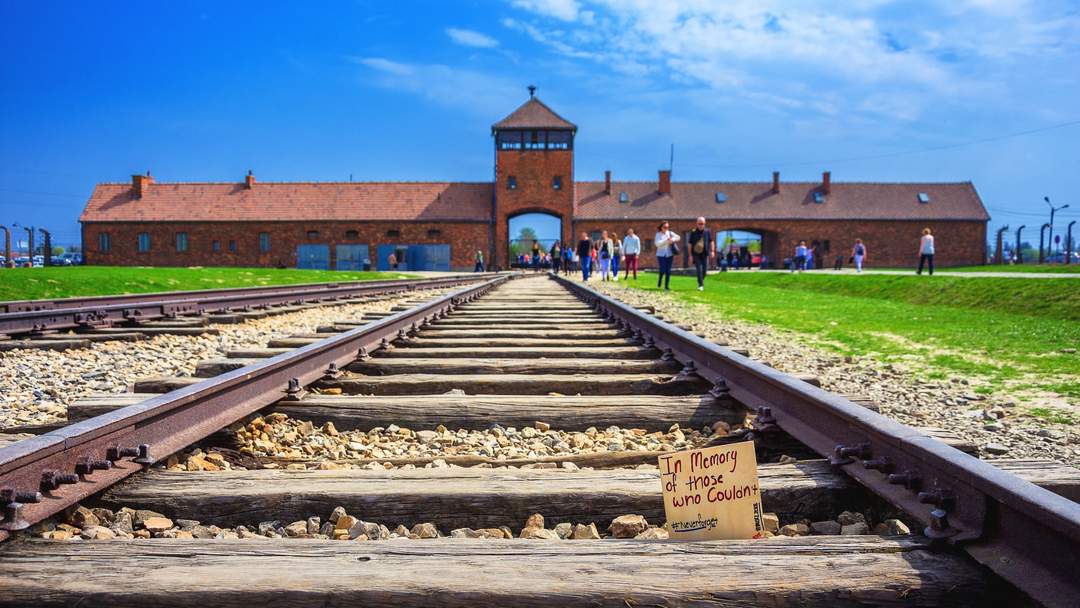
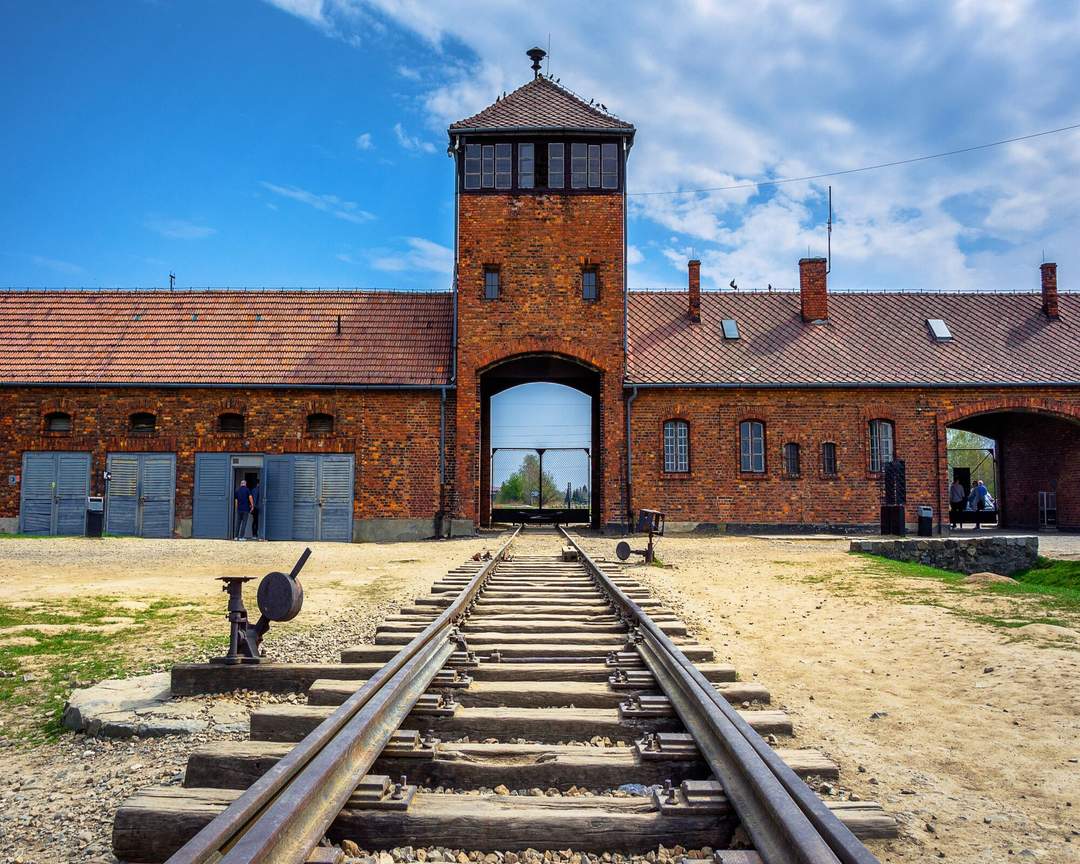
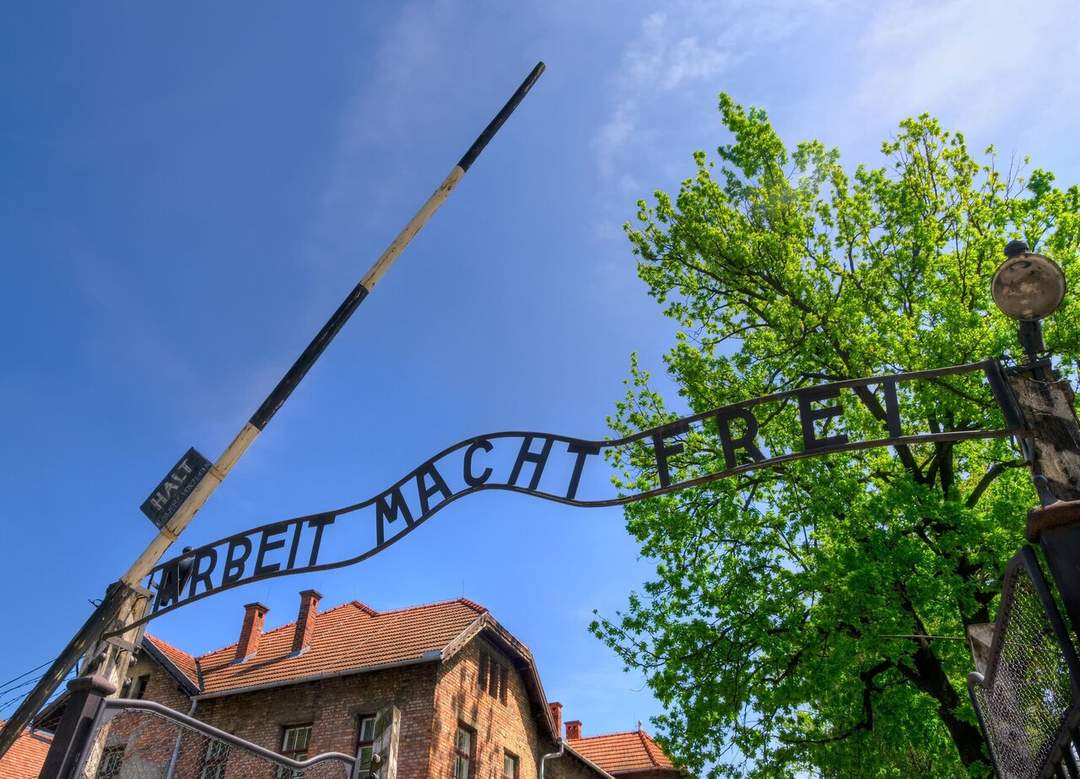
Most people arriving at Auschwitz II-Birkenau walk through the now-infamous brick entrance known as the “Gate of Death.” Once inside, their path leads toward the memorial and the ruins of the crematoria. But just a few steps to the right lies one of the most significant locations in the entire Auschwitz concentration camp complex – the railway ramp where selections took place.
Laid out in the spring of 1944, this third ramp was constructed after the earlier ones – including the so-called Judenrampe, which lay between Auschwitz I and Birkenau – became insufficient to handle the growing number of transports. This new ramp extended directly into the heart of Birkenau. Trains could now stop between crematoria II and III, enabling the Nazis to carry out selections more efficiently and more discreetly.
The ramp at the Auschwitz II camp
The Mechanism of Selection
From May to October 1944, the ramp was the main site of selections – a systemized process in which arriving prisoners were divided into two groups. SS doctors and officers, often within seconds and without explanation, decided who would be sent to forced labor and who would be murdered immediately in the gas chambers.
The victims included:
430,000 Hungarian Jews deported during just two months in 1944,
67,000 Jews from the Łódź ghetto,
Polish civilians, including prisoners from Warsaw after the uprising,
and other groups from Slovakia, Terezín, and beyond.
The ramp, lined with sidings, functioned not only as a place of arrival but also as a center of deportation – prisoners were also sent from here to other Auschwitz subcamps and concentration camps across Europe.
Walk in the footsteps of history on a professionally guided visit to Auschwitz-Birkenau – one of the most important memorial sites in the world. Departing from Krakow, this all-inclusive tour offers powerful insight, respectful reflection, and seamless logistics, so you can focus on what truly matters. Led by a licensed guide, you'll visit both Auschwitz I and Auschwitz II-Birkenau and return with a deeper understanding of the past. Whether travelling solo or with others, this tour is trusted by thousands every year for its emotional impact and flawless organisation.
Duration: 7hLive guideSkip-theLineTransportation included
Secure your skip-the-line entry to the Auschwitz-Birkenau Memorial and Museum and take part in an official guided tour led by a licensed museum educator. This is a unique opportunity to reflect on history in a respectful setting. Skip-the-line tickets are ideal for visitors who prefer to travel to the site independently and join the guided group on location.
Duration: 4hLive guideSkip-theLineTransportation included
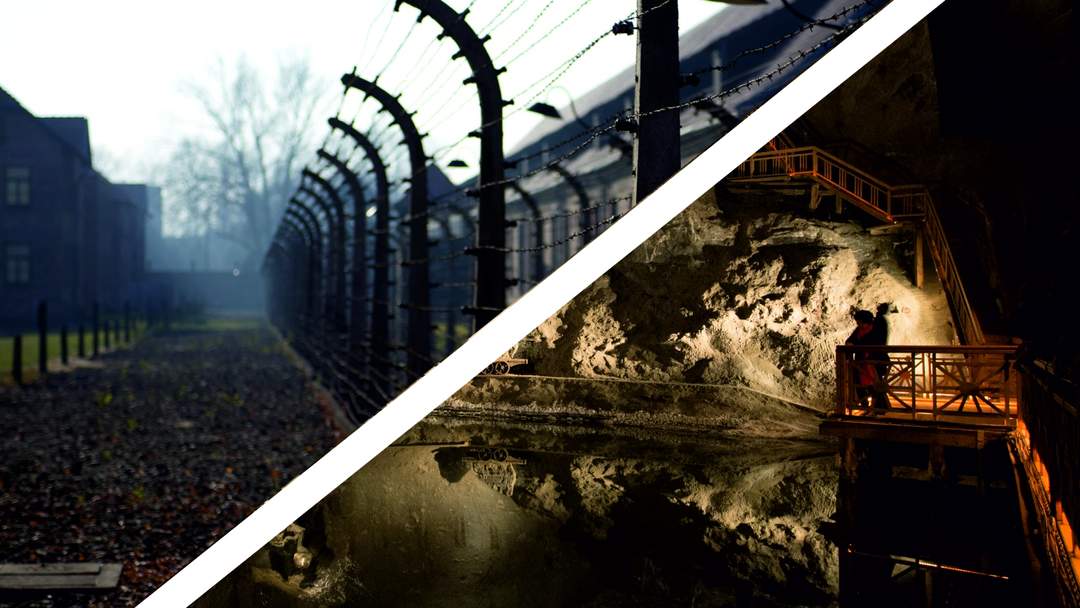
Maximize your time in Krakow with our specially curated 1 day tour, combining the essential visits to Auschwitz-Birkenau and Wieliczka Salt Mine. This one day adventure offers you a chance to experience two of Krakow's most significant and must-see locations: the historical Auschwitz Camp and the mesmerizing Salt Mine in Wieliczka. Our well organized tour ensures you don't miss out on what these sites have to offer, making your visit truly worthwhile. Book now to discover the best of Krakow in just one day trip!
Duration: 11hLive guideSkip-theLineTransportation included
Book a private transfer from Krakow to Auschwitz-Birkenau Memorial and Museum and travel comfortably without worrying about public transport or fixed timetables. Choose between one-way transport or a round-trip option with the driver waiting on site.
What happened in Auschwitz was not only a matter of violence and death but also of control through psychological manipulation. People arriving on the ramp were told they were being resettled or sent to labor camps. Families believed they would be reunited. Suitcases were marked, names registered, and possessions carefully packed—small acts of hope amid the fear.
All of this was designed to prevent panic and resistance. The truth—that the selection process determined who would live and who would be sent to immediate death—was carefully concealed until it was far too late. Those chosen for extermination were often told they were going to take a shower to be disinfected. They were led to undressing rooms, instructed to leave their belongings in order, and reassured they would return shortly.
Instead of water, however, the shower rooms were gas chambers. The doors were sealed, and within minutes, Zyklon B was introduced. Many victims never realized the truth until the very last moments of their lives. The cruelty of this deception—carried out with cold precision—remains one of the most haunting elements of the Auschwitz concentration camp system.
Selection on the ramp at Auschwitz-Birkenau, 1944
Other Ramps in Auschwitz History
The ramp inside Birkenau was the third and final of its kind in the Auschwitz camp system. Before it was built:
The first unloading ramp near Auschwitz I was used from 1940 for Polish prisoners and early Jewish transports.
The second ramp, commonly known as the Alte Judenrampe, operated from 1942 to early 1944 and stood near the Oświęcim freight station. It was here that most Jewish transports arrived before the expansion of Birkenau.
All three ramps were also used to send prisoners out of Auschwitz to forced labor in industrial plants or to other camps across the continent.
A freight car on the ramp at Auschwitz II
The Ramp Today: A Place of Memory
When visiting Auschwitz, most guided tours include a moment of reflection at the Birkenau ramp. Along the tracks stands an original German freight car – a symbol of the inhumane deportation process. Nearby, commemorative plaques honor the victims, especially the Hungarian Jews whose transports arrived here in such vast numbers.
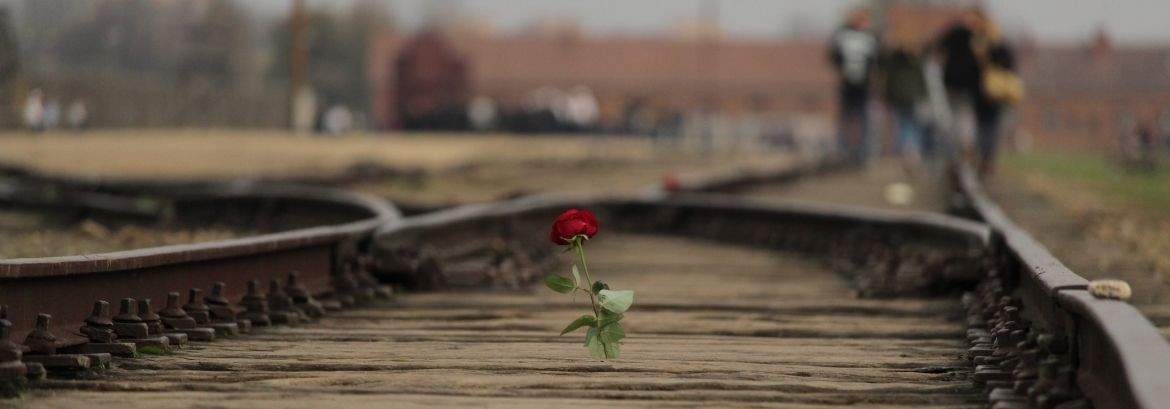
Many visitors choose to leave candles at the end of the ramp – a quiet, symbolic act of remembrance.
From this point, the walk toward the ruins of the crematoria offers a deeper understanding of the industrial scale of the extermination. Yet it is on the ramp that we truly confront the moment where fate was decided – often with a single gesture of the hand.
Walk in the footsteps of history on a professionally guided visit to Auschwitz-Birkenau – one of the most important memorial sites in the world. Departing from Krakow, this all-inclusive tour offers powerful insight, respectful reflection, and seamless logistics, so you can focus on what truly matters. Led by a licensed guide, you'll visit both Auschwitz I and Auschwitz II-Birkenau and return with a deeper understanding of the past. Whether travelling solo or with others, this tour is trusted by thousands every year for its emotional impact and flawless organisation.
Duration: 7hLive guideSkip-theLineTransportation included
Secure your skip-the-line entry to the Auschwitz-Birkenau Memorial and Museum and take part in an official guided tour led by a licensed museum educator. This is a unique opportunity to reflect on history in a respectful setting. Skip-the-line tickets are ideal for visitors who prefer to travel to the site independently and join the guided group on location.
Duration: 4hLive guideSkip-theLineTransportation included
Maximize your time in Krakow with our specially curated 1 day tour, combining the essential visits to Auschwitz-Birkenau and Wieliczka Salt Mine. This one day adventure offers you a chance to experience two of Krakow's most significant and must-see locations: the historical Auschwitz Camp and the mesmerizing Salt Mine in Wieliczka. Our well organized tour ensures you don't miss out on what these sites have to offer, making your visit truly worthwhile. Book now to discover the best of Krakow in just one day trip!
Duration: 11hLive guideSkip-theLineTransportation included
Book a private transfer from Krakow to Auschwitz-Birkenau Memorial and Museum and travel comfortably without worrying about public transport or fixed timetables. Choose between one-way transport or a round-trip option with the driver waiting on site.
The history of Auschwitz-Birkenau is inseparable from the ramp and the process of selection. These were not isolated events but part of a deliberately designed system of extermination.
Preserving these places and understanding their function is crucial – not only to honor the victims but to learn from the past. What happened on the ramp teaches us how ordinary systems—railways, logistics, bureaucracy—can be used in the service of extraordinary evil.
Let us not forget. Let us speak about it. Let us stand, if only for a moment, in silence.
Planning Your Visit
If you are planning to visit Auschwitz and Birkenau, we recommend reading our guide on how to visit Auschwitz, which includes practical tips and respectful suggestions.
Walk in the footsteps of history on a professionally guided visit to Auschwitz-Birkenau – one of the most important memorial sites in the world. Departing from Krakow, this all-inclusive tour offers powerful insight, respectful reflection, and seamless logistics, so you can focus on what truly matters. Led by a licensed guide, you'll visit both Auschwitz I and Auschwitz II-Birkenau and return with a deeper understanding of the past. Whether travelling solo or with others, this tour is trusted by thousands every year for its emotional impact and flawless organisation.
Duration: 7hLive guideSkip-theLineTransportation included
Maximize your time in Krakow with our specially curated 1 day tour, combining the essential visits to Auschwitz-Birkenau and Wieliczka Salt Mine. This one day adventure offers you a chance to experience two of Krakow's most significant and must-see locations: the historical Auschwitz Camp and the mesmerizing Salt Mine in Wieliczka. Our well organized tour ensures you don't miss out on what these sites have to offer, making your visit truly worthwhile. Book now to discover the best of Krakow in just one day trip!
Duration: 11hLive guideSkip-theLineTransportation included
Secure your skip-the-line entry to the Auschwitz-Birkenau Memorial and Museum and take part in an official guided tour led by a licensed museum educator. This is a unique opportunity to reflect on history in a respectful setting. Skip-the-line tickets are ideal for visitors who prefer to travel to the site independently and join the guided group on location.
Duration: 4hLive guideSkip-theLineTransportation included
Book a private transfer from Krakow to Auschwitz-Birkenau Memorial and Museum and travel comfortably without worrying about public transport or fixed timetables. Choose between one-way transport or a round-trip option with the driver waiting on site.













 Duration: 7h
 Live guide
 Skip-theLine
 Transportation included