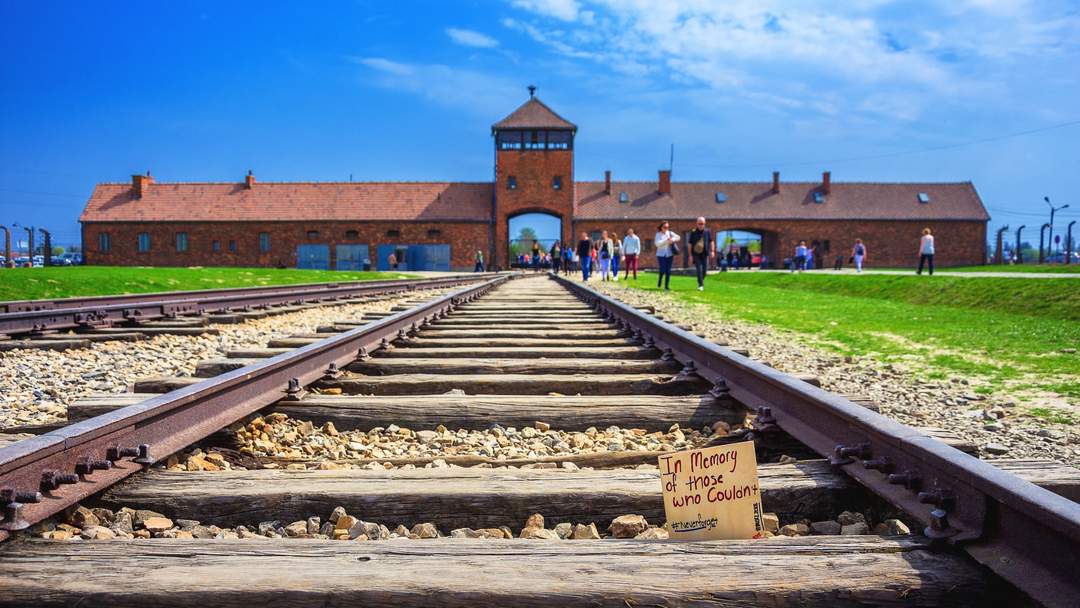
Explore the history and dark symbolism of Auschwitz’s infamous gate sign. Learn who built it, what it meant, and how it was once stolen and recovered.
May 4, 2021
The “Arbeit macht frei” Sign at Auschwitz – Historical Context and Meaning
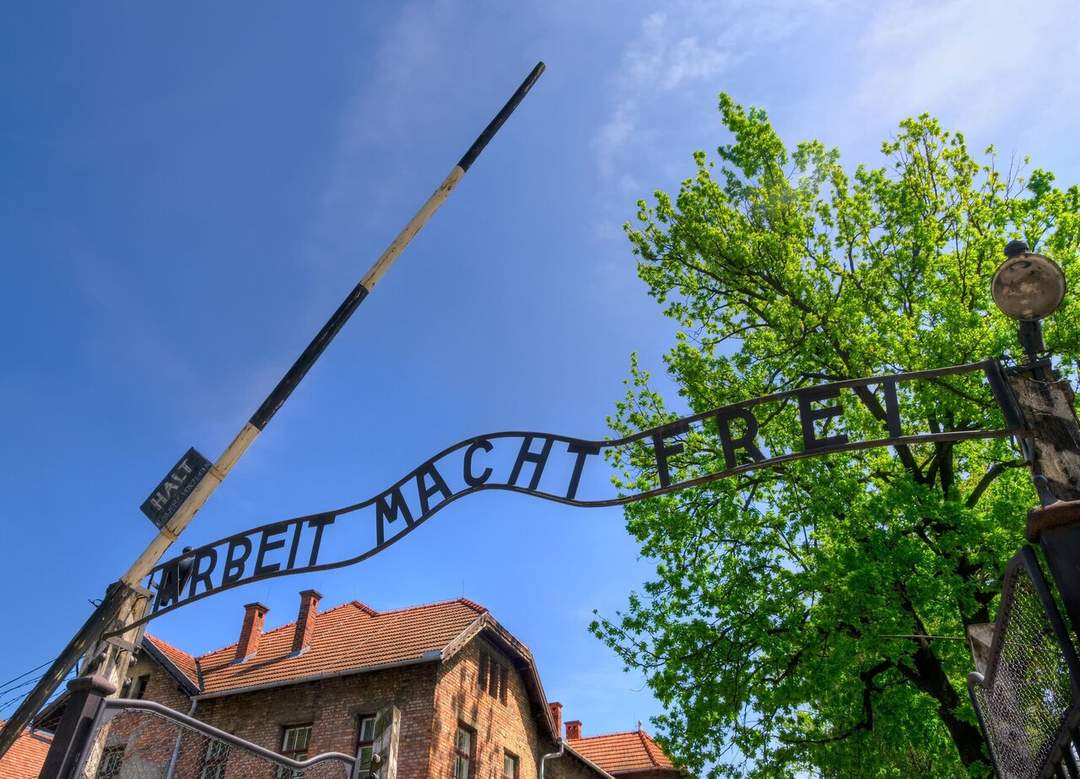
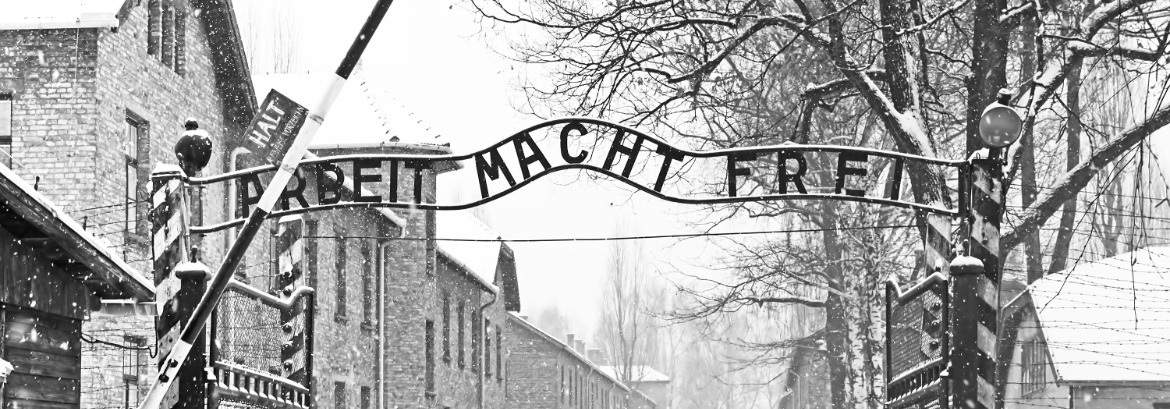
Few symbols are as haunting as the wrought-iron sign that greets visitors at the entrance to Auschwitz. Arbeit macht frei – “Work sets you free” – is not just a phrase. It’s a chilling paradox, crafted with sinister precision and placed above the gate of one of the most infamous death camps in human history.
To those unaware, it might sound like a motivational slogan. But for those who passed beneath it, and for anyone who’s studied the camp’s harrowing past, it is a cruel mockery. The sign was mounted not only in Auschwitz, but also at other Nazi camps: Dachau, Sachsenhausen, Gross-Rosen, Theresienstadt, Flossenbürg. It became a brand of terror masked as purpose.
If you’d like to understand how Auschwitz-Birkenau came into existence and evolved into a factory of death, we recommend our full article on the history of Auschwitz-Birkenau.
Knowing the full terrifying history of the Nazi concentration camps, it is clear how derisive this slogan was. For the prisoners, the only way of becoming free was generally through death, as they used to say themselves, repeating a camp couplet that was as ironic as the inscription itself.
Arbeit macht frei durch Krematorium Nummer drei
[Work sets you free through crematorium number three]
The gate was constructed by Polish prisoners under the leadership of Jan Liwacz (camp number 1010 – a master of artistic blacksmithing before he was sent to Auschwitz), who arrived in Auschwitz in one of the first transports from the prison in Wiśnicz in 1940. The construction itself was part of the work related to the strengthening of the camp fence (when the wooden poles were replaced with reinforced concrete ones with taut barbed wire).
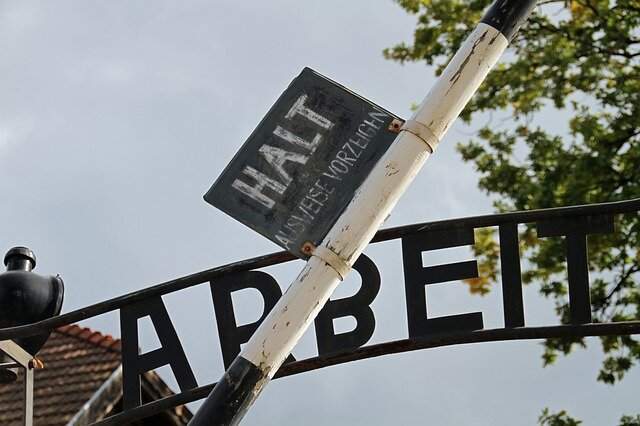
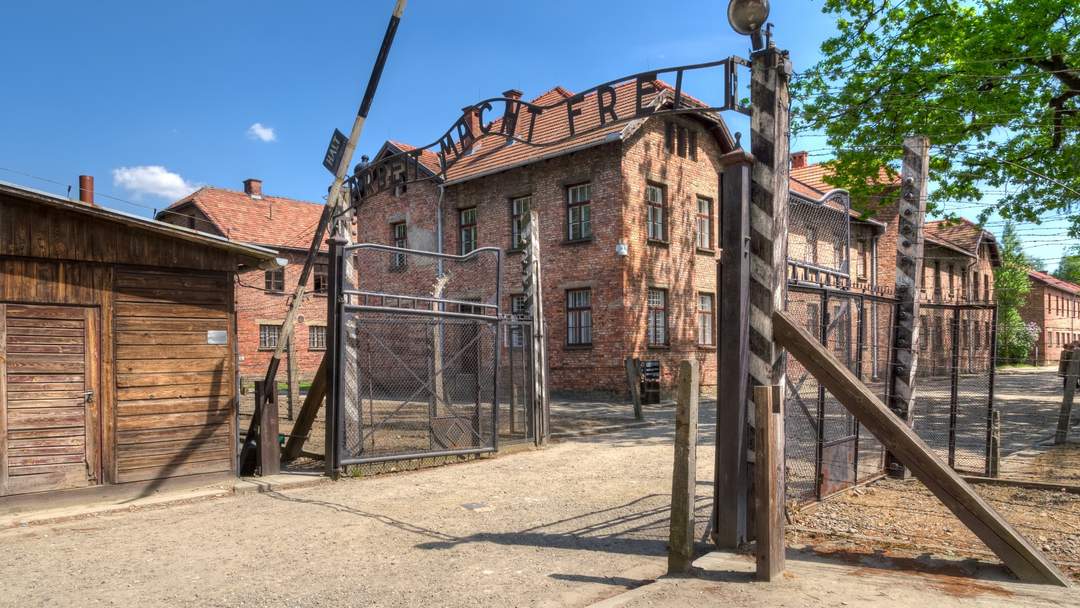
When you look at the sign, you might be able to notice that the letter “B” is welded upside down. Rumour has it that the blacksmiths did this on purpose – as an act of rebellion. However, there is also the theory that it was merely accidental.
Kazimierz Albin (1922–2019), one of the few survivors who came to Auschwitz in the first transport (camp number 118), clearly remembers the day that the sign was mounted on the gate:
We were shocked by the cynicism of the Germans. They wrote ‘Work sets you free’, but we found out for ourselves that the work at Auschwitz was only a method of killing prisoners. So we quickly put together the words ‘Arbeit Macht Frei durch den Schornstein’, meaning ‘Work makes you free [to exit] through the chimney.’
After the liberation of the camp, the Soviets planned to transport the inscription to Russia, but former prisoner Eugeniusz Nosal (camp number 693) thwarted their plans by bribing a guard watching a wagon with the load – allegedly using a bottle of moonshine – and then hiding the inscription in the Auschwitz town hall. Thanks to this, when the Museum and Memorial Site was created, the slogan returned to the gate.
Auschwitz-Birkenau Museum, drawing from the series 'Prisoner's Day' Author: Mieczysław Kościelniak - former prisoner of KL Auschwitz
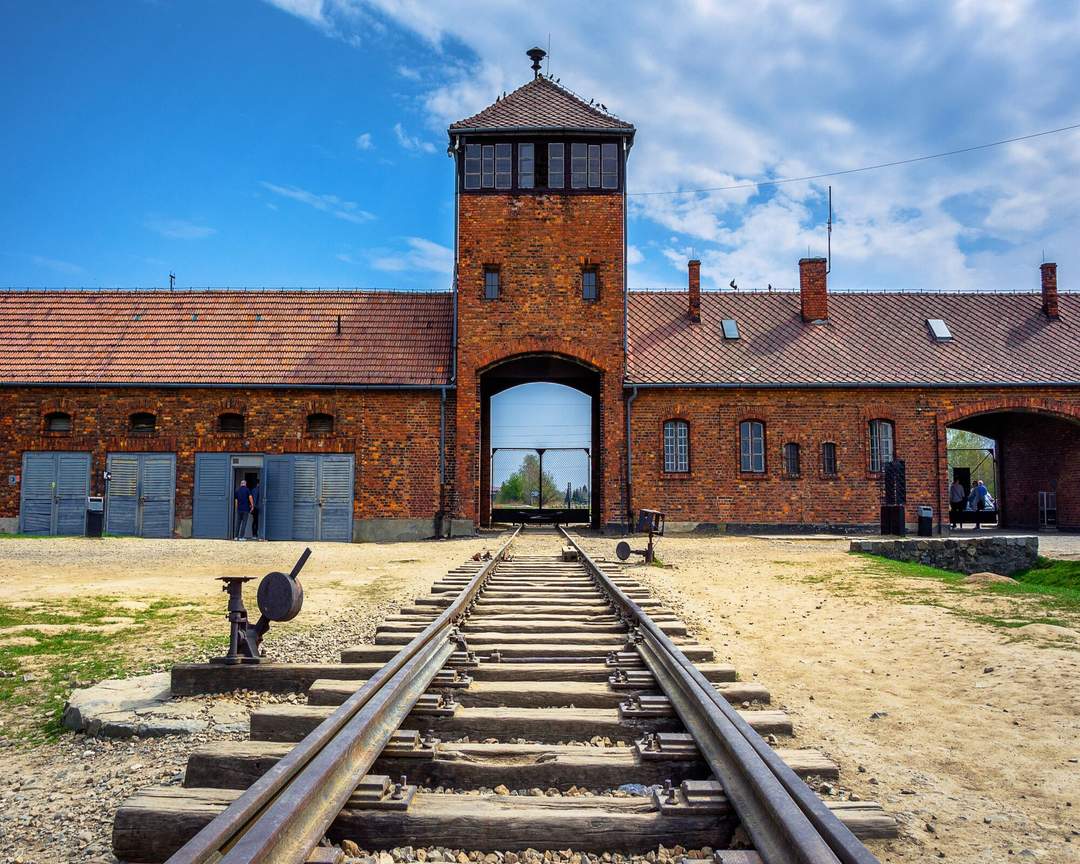
Walk in the footsteps of history on a professionally guided visit to Auschwitz-Birkenau – one of the most important memorial sites in the world. Departing from Krakow, this all-inclusive tour offers powerful insight, respectful reflection, and seamless logistics, so you can focus on what truly matters. Led by a licensed guide, you'll visit both Auschwitz I and Auschwitz II-Birkenau and return with a deeper understanding of the past. Whether travelling solo or with others, this tour is trusted by thousands every year for its emotional impact and flawless organisation.
Duration: 7hLive guideSkip-theLineTransportation included
Secure your skip-the-line entry to the Auschwitz-Birkenau Memorial and Museum and take part in an official guided tour led by a licensed museum educator. This is a unique opportunity to reflect on history in a respectful setting. Skip-the-line tickets are ideal for visitors who prefer to travel to the site independently and join the guided group on location.
Duration: 4hLive guideSkip-theLineTransportation included
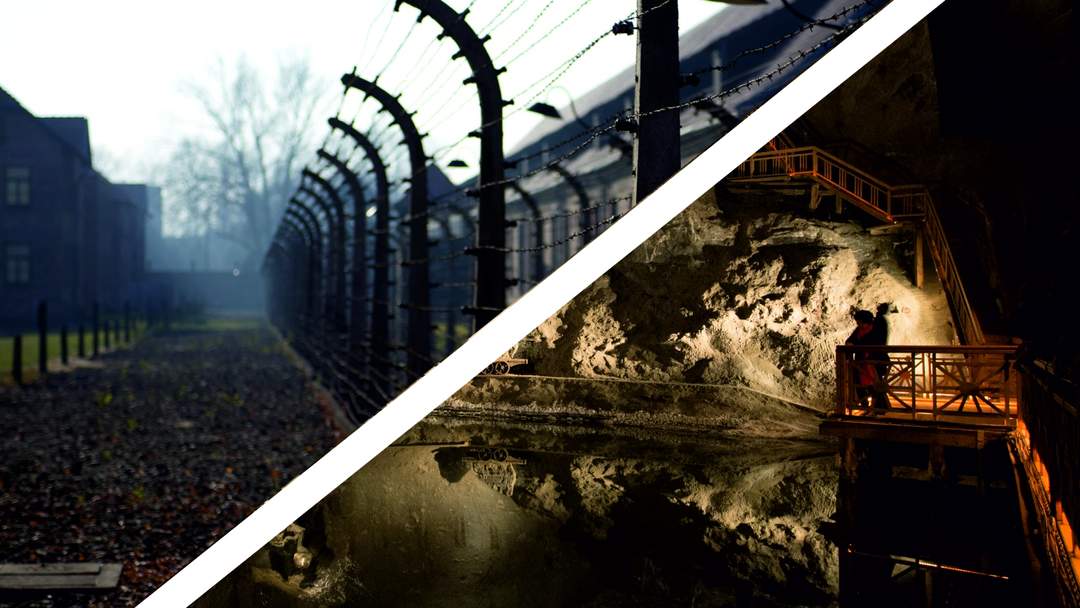
Maximize your time in Krakow with our specially curated 1 day tour, combining the essential visits to Auschwitz-Birkenau and Wieliczka Salt Mine. This one day adventure offers you a chance to experience two of Krakow's most significant and must-see locations: the historical Auschwitz Camp and the mesmerizing Salt Mine in Wieliczka. Our well organized tour ensures you don't miss out on what these sites have to offer, making your visit truly worthwhile. Book now to discover the best of Krakow in just one day trip!
Duration: 11hLive guideSkip-theLineTransportation included
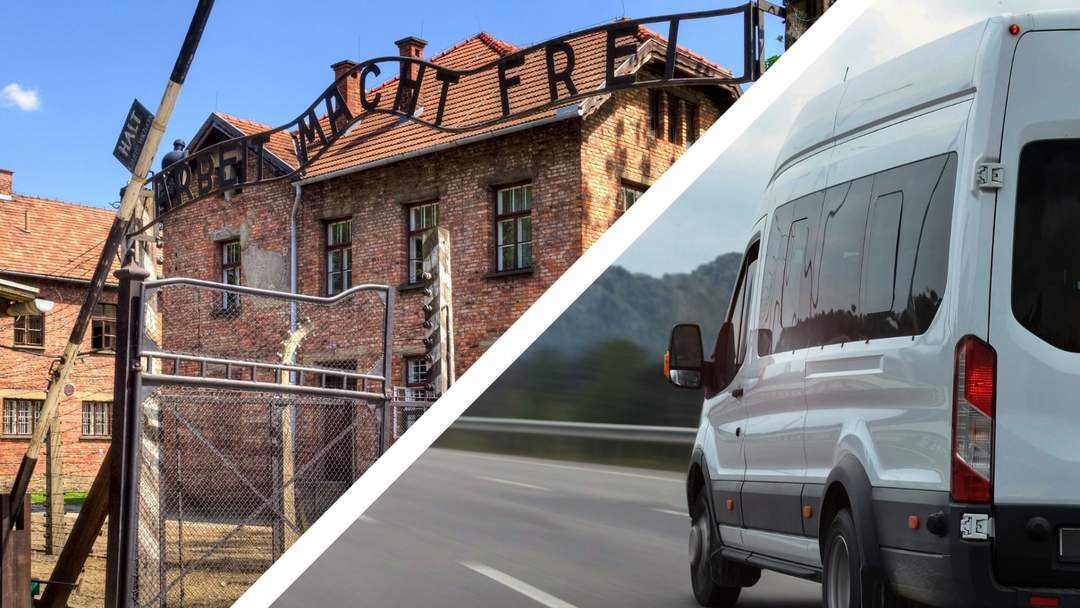
Book a private transfer from Krakow to Auschwitz-Birkenau Memorial and Museum and travel comfortably without worrying about public transport or fixed timetables. Choose between one-way transport or a round-trip option with the driver waiting on site.
Interestingly, in December 2009, the inscription was stolen. Fortunately, it was recovered – in three parts – just 70 hours later in a village near Toruń, from where it was supposed to continue its journey to… Sweden. Marcin A. and Andrzej S., as well as Anders Högström, who was said to be directing the group, were held responsible for the theft. The defendant claimed that the theft was not on his order, but that the inscription was ordered by a Swedish millionaire Lars-Göran Wahlström connected to neo-Nazis.
Högström testified at the time that the Arbeit macht frei inscription was supposed to be sold, and the money was planned to finance a Nazi attack on the Swedish government. It was no secret that Lars-Göran Wahlström was interested in post-war memorabilia – reportedly in his villa hung portraits of Adolf Hitler, a flag with a swastika, decorations, and other artifacts related to Nazism. He personally knew Högström, but due to a lack of evidence, he was cleared of the charges. Only in 2020, in the book Extremisten [Extremist] by journalist Bosse Gustafsson, Anders Högström confessed that he was the mastermind behind the entire operation and there was no instigator or conspiracy.
Since this incident, the original inscription has been displayed at the Auschwitz-Birkenau Museum, and a replica hangs on the gate. This is related not only to the theft but also to atmospheric conditions that can cause its corrosion.
Interestingly, a similar story happened to the inscription from the Dachau camp, which was stolen in 2014. It was only found two years later in Norway. It is hard not to get the impression that Nazi artifacts arouse unhealthy fascination in some people.
Gate with the inscription Arbeit macht frei (work sets you free), Auschwitz-Birkenau I, Oświęcim
Visiting
Seeing the gate of the Auschwitz-Birkenau Museum, it is worth remembering that over 1.3 million people crossed it during the occupation. When liberation came, only about 7,000 survivors could walk out through it (over five years, about 200,000 people survived their stay in the camp – some of them died during the so-called death marches). With this in mind, it seems appropriate to refrain from taking a selfie with a wide smile against the backdrop of the Arbeit macht frei inscription, which unfortunately happens to some tourists. Auschwitz is not only a museum but also a memorial site and, above all, one of the largest cemeteries in the world.
Walk in the footsteps of history on a professionally guided visit to Auschwitz-Birkenau – one of the most important memorial sites in the world. Departing from Krakow, this all-inclusive tour offers powerful insight, respectful reflection, and seamless logistics, so you can focus on what truly matters. Led by a licensed guide, you'll visit both Auschwitz I and Auschwitz II-Birkenau and return with a deeper understanding of the past. Whether travelling solo or with others, this tour is trusted by thousands every year for its emotional impact and flawless organisation.
Duration: 7hLive guideSkip-theLineTransportation included
Maximize your time in Krakow with our specially curated 1 day tour, combining the essential visits to Auschwitz-Birkenau and Wieliczka Salt Mine. This one day adventure offers you a chance to experience two of Krakow's most significant and must-see locations: the historical Auschwitz Camp and the mesmerizing Salt Mine in Wieliczka. Our well organized tour ensures you don't miss out on what these sites have to offer, making your visit truly worthwhile. Book now to discover the best of Krakow in just one day trip!
Duration: 11hLive guideSkip-theLineTransportation included
Secure your skip-the-line entry to the Auschwitz-Birkenau Memorial and Museum and take part in an official guided tour led by a licensed museum educator. This is a unique opportunity to reflect on history in a respectful setting. Skip-the-line tickets are ideal for visitors who prefer to travel to the site independently and join the guided group on location.
Duration: 4hLive guideSkip-theLineTransportation included
Book a private transfer from Krakow to Auschwitz-Birkenau Memorial and Museum and travel comfortably without worrying about public transport or fixed timetables. Choose between one-way transport or a round-trip option with the driver waiting on site.










 Duration: 7h
 Live guide
 Skip-theLine
 Transportation included