THE TATTOOIST OF AUSCHWITZ – Did it really happen?
March 21, 2022
Explore the real story behind The Tattooist of Auschwitz. Discover historical inaccuracies, expert critiques, and facts from the Auschwitz Museum.
March 21, 2022
The Tattooist of Auschwitz – Fact, Fiction & Historical Controversy
"The Tattooist of Auschwitz", written by Heather Morris and published in 2018, quickly became an international bestseller. Blending romance and tragedy, it captivated readers around the world – but also sparked significant debate over historical accuracy. But how true is this story? Let’s take a closer look.
About the Author – Heather Morris
Heather Morris is a New Zealand-born writer living in Australia. She met an elderly Holocaust survivor, Lale Sokolov, while working at a hospital in Melbourne. That encounter led to a close friendship and eventually a novel inspired by his story.
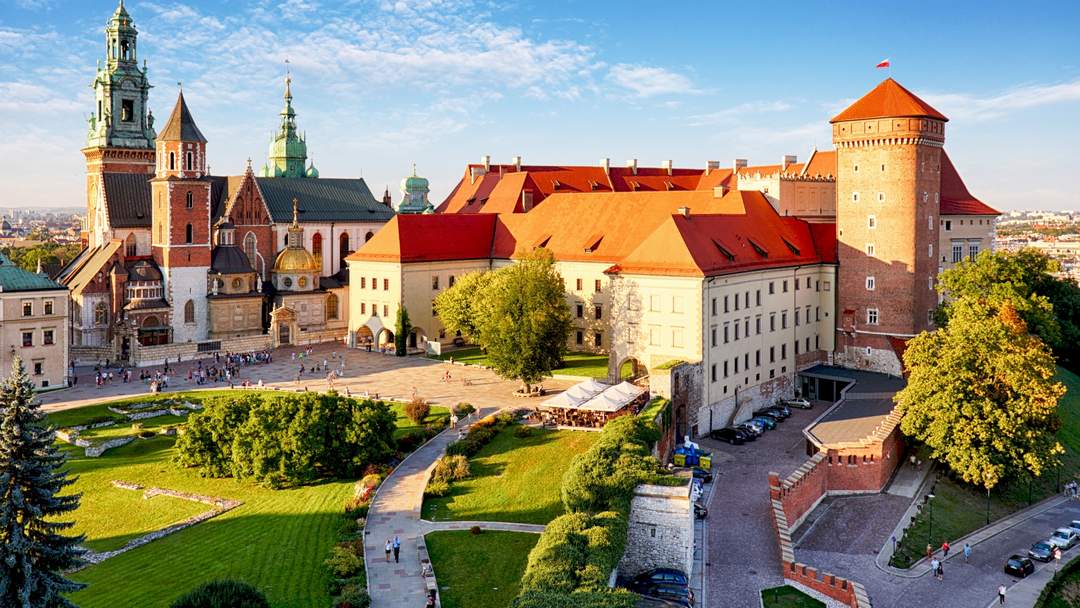
Explore Wawel Castle in Krakow from the outside and understand its history, architecture, and royal significance during a relaxed self-guided walk with a professional audio guide. This tour focuses on Wawel Hill and the castle grounds, offering clear historical context before visiting the castle interiors or booking Wawel Castle tickets.
Once the former residence of Polish kings, Wawel Castle remains one of the most important landmarks in Poland. This audio tour helps you experience the site with deeper understanding – without rushing, crowds, or fixed schedules – making it an ideal introduction to any Wawel Castle visit.
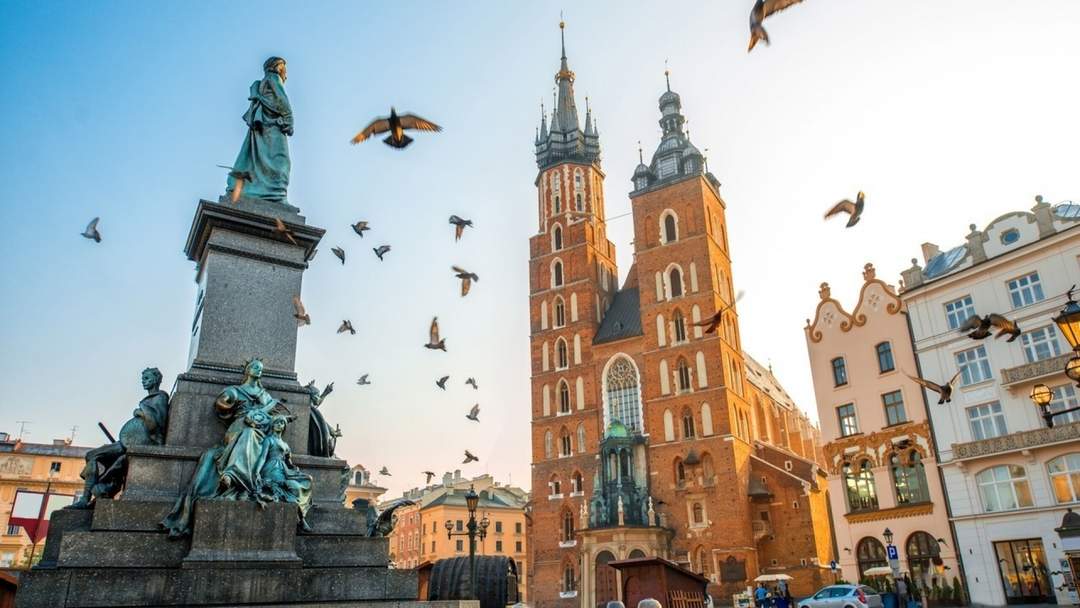
Explore Krakow’s Old Town at your own pace with a professionally prepared audio guide. This self-guided walking tour takes you through the most important sites of the historic centre, including Krakow’s Main Square and its surrounding streets. Listen to engaging commentary filled with history, fascinating facts, legends and local trivia – an ideal introduction to Krakow for first-time visitors and independent travellers.
Discover the rich history and cultural heritage of the Jewish Quarter of Krakow with a carefully prepared audio guide for independent sightseeing. This self-guided walking tour takes you through Kazimierz – the historic Jewish district – allowing you to explore its streets, stories and atmosphere at your own pace.
Kazimierz lies just a short walk from Krakow’s Old Town and is a place where the city’s past and present meet. Through narration and historical context, the audio guide introduces the history of the Jewish community, their contribution to the city, and the lasting impact of World War II on this remarkable district.
Explore Krakow in a fast, comfortable, and eco-friendly way with a Krakow City Tour by electric golf cart. This sightseeing tour is a great introduction to the city, especially for first-time visitors or travellers with limited time who want to see the highlights without long walks.
During the ride, you will explore key areas of Krakow, including the Old Town surroundings, Kazimierz – the historic Jewish district, and parts of Podgórze, where the famous Schindler’s Factory was located. A professionally prepared audio guide provides historical context and helps you understand the city’s past and character.
This electric car tour allows you to see more in less time while staying comfortable in all weather conditions, making it an easy and practical way to start exploring Krakow.
Duration: 1h - 2hAudio GuideTransportation included
Step inside Oskar Schindler’s Enamel Factory in Krakow and explore the city’s history during World War II on a guided visit with a licensed guide. During the tour, you will learn about everyday life in occupied Krakow, the tragedy of the Krakow Ghetto, and the true story of a man who saved more than a thousand lives. The presence of a guide allows you to immerse yourself more deeply in the exhibition and better understand the broader historical context and the human stories behind the events.
Duration: 2hLive guideSkip-theLineTransportation included
Explore Krakow on a guided city tour with a licensed local guide. Walk through the city’s most iconic districts, such as the Old Town or Kazimierz, and learn about their history through engaging stories and reliable historical insights. This tour is a perfect introduction to Krakow, offering both famous landmarks and lesser-known places explained by a professional guide who is happy to answer your questions.
Duration: 2h - 3hLive guideSkip-theLineTransportation included
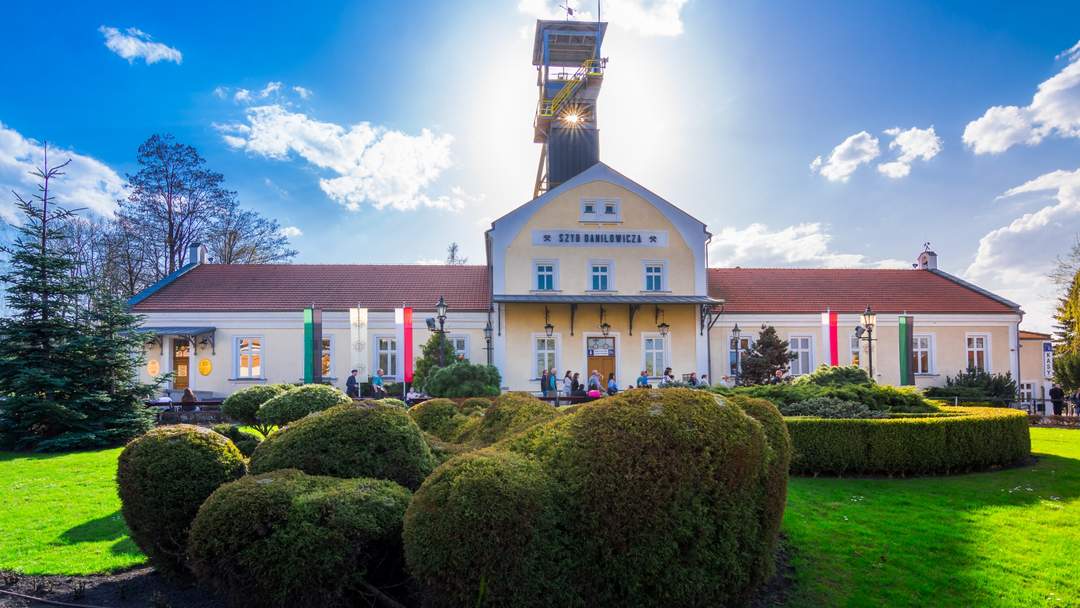
Get your Wieliczka Salt Mine tickets in advance and skip the ticket office queues. This entry ticket with guided tour guarantees access to one of Poland’s most iconic UNESCO World Heritage Sites, with a local expert leading you through 2.5 km of underground chambers, tunnels and chapels – including the stunning Chapel of St. Kinga. Choose your language, select your tour date and preferred time, and enjoy a seamless experience without the stress of same-day availability or long lines.
Book online now to guarantee your entry to this unforgettable underground experience in Poland.
Duration: 3hLive guideSkip-theLineTransportation included
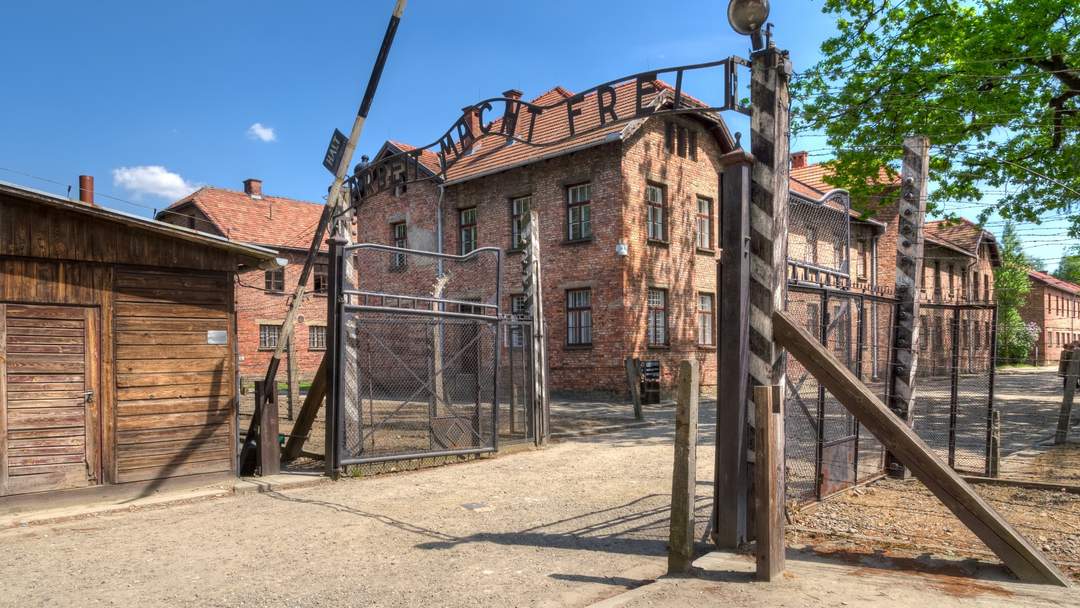
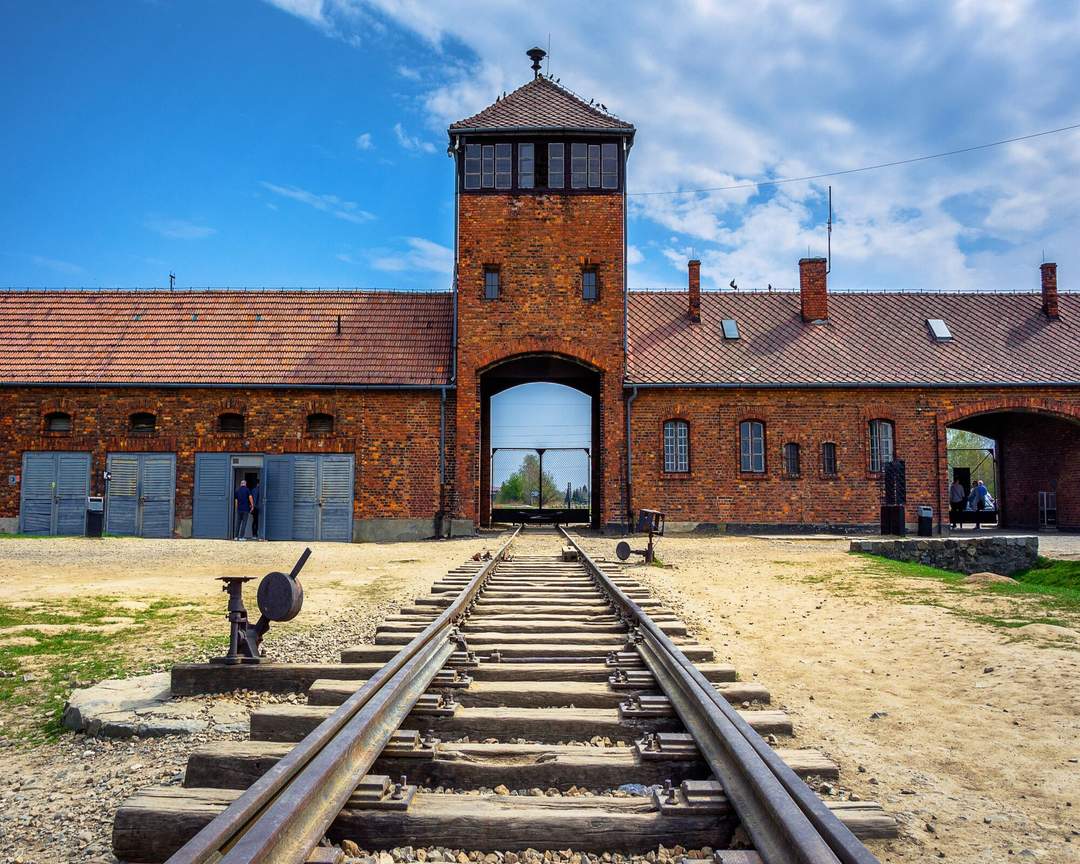
Walk in the footsteps of history on a professionally guided visit to Auschwitz-Birkenau – one of the most important memorial sites in the world. Departing from Krakow, this all-inclusive tour offers powerful insight, respectful reflection, and seamless logistics, so you can focus on what truly matters. Led by a licensed guide, you'll visit both Auschwitz I and Auschwitz II-Birkenau and return with a deeper understanding of the past. Whether travelling solo or with others, this tour is trusted by thousands every year for its emotional impact and flawless organisation.
Duration: 7hLive guideSkip-theLineTransportation included
The book follows Lale Sokolov, a Slovakian Jew deported to Auschwitz-Birkenau in 1942. He becomes the camp’s tattooist, responsible for marking identification numbers on new arrivals. Amidst unimaginable horror, he falls in love with Gita Furman, another Slovakian prisoner.
Though separated by the end of the war – Gita forced into a death march, and Lale transferred to Mauthausen – they reunited after liberation, married, and lived together until Gita’s death in 2003.
The novel intertwines the atrocities of Nazi concentration camps with an unusual love story. After decades of silence, Lale opened up to Morris, sharing his memories – and his trauma.
Lale Sokolov with Gita and their son Gary
Criticism from Museums and Historians
While The Tattooist of Auschwitz captivated readers worldwide, many experts have raised serious concerns about its historical accuracy. The strongest response came from the Auschwitz-Birkenau State Museum, which issued a public statement describing the book as:
"An impression about Auschwitz inspired by authentic events, almost without any value as a document."
Museum historians emphasized that the novel contains numerous errors, inconsistencies, and exaggerations. Among the most problematic are:
Inaccurate prisoner transport routes and incorrect numbering of inmates – the numbers mentioned in the book do not align with historical records for the given dates.
Misrepresentation of the tattooist’s role – tattooing was not assigned permanently to one individual, but rather carried out by different prisoners as needed.
Fictional scene involving Dr. Mengele sterilizing a male prisoner – in reality, his experiments focused on twins and people with dwarfism.
Inaccurate account of the Sonderkommando revolt – only one crematorium was damaged, not two, and the destruction was only partial.
Implausible details such as smuggling gunpowder under fingernails, which experts called “ridiculous.”
You can read a full breakdown of these inaccuracies in the Auschwitz Museum’s journal Memoria: 👉 memoria-en-no-14-11-2018
The United States Holocaust Memorial Museum and researchers at Yad Vashem have also warned against the growing trend of fictional Holocaust stories being perceived as historical truth. While not always referring to specific books, they emphasize the need for readers to distinguish between documentation and dramatization, especially in cases of so-called “Holocaust romance.”
To learn more about the real process of tattooing in Auschwitz, read our detailed article that clears up many of the common misconceptions.
Explore Wawel Castle in Krakow from the outside and understand its history, architecture, and royal significance during a relaxed self-guided walk with a professional audio guide. This tour focuses on Wawel Hill and the castle grounds, offering clear historical context before visiting the castle interiors or booking Wawel Castle tickets.
Once the former residence of Polish kings, Wawel Castle remains one of the most important landmarks in Poland. This audio tour helps you experience the site with deeper understanding – without rushing, crowds, or fixed schedules – making it an ideal introduction to any Wawel Castle visit.
Explore Krakow’s Old Town at your own pace with a professionally prepared audio guide. This self-guided walking tour takes you through the most important sites of the historic centre, including Krakow’s Main Square and its surrounding streets. Listen to engaging commentary filled with history, fascinating facts, legends and local trivia – an ideal introduction to Krakow for first-time visitors and independent travellers.
Discover the rich history and cultural heritage of the Jewish Quarter of Krakow with a carefully prepared audio guide for independent sightseeing. This self-guided walking tour takes you through Kazimierz – the historic Jewish district – allowing you to explore its streets, stories and atmosphere at your own pace.
Kazimierz lies just a short walk from Krakow’s Old Town and is a place where the city’s past and present meet. Through narration and historical context, the audio guide introduces the history of the Jewish community, their contribution to the city, and the lasting impact of World War II on this remarkable district.
Explore Krakow in a fast, comfortable, and eco-friendly way with a Krakow City Tour by electric golf cart. This sightseeing tour is a great introduction to the city, especially for first-time visitors or travellers with limited time who want to see the highlights without long walks.
During the ride, you will explore key areas of Krakow, including the Old Town surroundings, Kazimierz – the historic Jewish district, and parts of Podgórze, where the famous Schindler’s Factory was located. A professionally prepared audio guide provides historical context and helps you understand the city’s past and character.
This electric car tour allows you to see more in less time while staying comfortable in all weather conditions, making it an easy and practical way to start exploring Krakow.
Duration: 1h - 2hAudio GuideTransportation included
Step inside Oskar Schindler’s Enamel Factory in Krakow and explore the city’s history during World War II on a guided visit with a licensed guide. During the tour, you will learn about everyday life in occupied Krakow, the tragedy of the Krakow Ghetto, and the true story of a man who saved more than a thousand lives. The presence of a guide allows you to immerse yourself more deeply in the exhibition and better understand the broader historical context and the human stories behind the events.
Duration: 2hLive guideSkip-theLineTransportation included
Explore Krakow on a guided city tour with a licensed local guide. Walk through the city’s most iconic districts, such as the Old Town or Kazimierz, and learn about their history through engaging stories and reliable historical insights. This tour is a perfect introduction to Krakow, offering both famous landmarks and lesser-known places explained by a professional guide who is happy to answer your questions.
Duration: 2h - 3hLive guideSkip-theLineTransportation included
Get your Wieliczka Salt Mine tickets in advance and skip the ticket office queues. This entry ticket with guided tour guarantees access to one of Poland’s most iconic UNESCO World Heritage Sites, with a local expert leading you through 2.5 km of underground chambers, tunnels and chapels – including the stunning Chapel of St. Kinga. Choose your language, select your tour date and preferred time, and enjoy a seamless experience without the stress of same-day availability or long lines.
Book online now to guarantee your entry to this unforgettable underground experience in Poland.
Duration: 3hLive guideSkip-theLineTransportation included
Walk in the footsteps of history on a professionally guided visit to Auschwitz-Birkenau – one of the most important memorial sites in the world. Departing from Krakow, this all-inclusive tour offers powerful insight, respectful reflection, and seamless logistics, so you can focus on what truly matters. Led by a licensed guide, you'll visit both Auschwitz I and Auschwitz II-Birkenau and return with a deeper understanding of the past. Whether travelling solo or with others, this tour is trusted by thousands every year for its emotional impact and flawless organisation.
Duration: 7hLive guideSkip-theLineTransportation included
In 2019, Heather Morris published "Cilka's Journey", a follow-up novel about a secondary character from The Tattooist of Auschwitz. It tells the story of Cecilia Klein, a teenage girl who is first imprisoned in Auschwitz, and later deported to a Soviet gulag.
The book was met with criticism for portraying Cilka’s relationships with SS officers and Soviet guards, which her surviving family members strongly denied. Her adoptive son even threatened legal action:
“I’m determined to clear Cecilia’s name. She was a wonderful person, one of life’s great survivors, and it makes me livid that she has been defamed in this way.” – Mail Online
Cecilia Klein with her husband in 50's Photograph: Courtesy of George Kovach
Final Thoughts – Is The Tattooist of Auschwitz Worth Reading?
There’s no doubt that The Tattooist of Auschwitz has moved countless readers and introduced them to one of the most tragic chapters in human history. Lale Sokolov’s story is emotionally compelling and sheds light on personal resilience, trauma, and survival. However, it’s important to understand its limitations.
This novel is best approached as a work of fiction inspired by real events – not a historical record. As such, it can serve as a starting point for further reading and reflection, but it should not be treated as a reliable source of knowledge about Auschwitz or the Holocaust.
If you’re interested in exploring authentic stories from Auschwitz, we recommend browsing the online library of the Auschwitz-Birkenau Memorial and Museum, where you’ll find first-hand accounts, such as prisoners’ letters and memoirs selected by historians.
To gain deeper understanding, consider joining a guided visit to the Auschwitz-Birkenau Memorial. Seeing the site in person, with expert commentary, is an experience that stays with you for life.
Walk in the footsteps of history on a professionally guided visit to Auschwitz-Birkenau – one of the most important memorial sites in the world. Departing from Krakow, this all-inclusive tour offers powerful insight, respectful reflection, and seamless logistics, so you can focus on what truly matters. Led by a licensed guide, you'll visit both Auschwitz I and Auschwitz II-Birkenau and return with a deeper understanding of the past. Whether travelling solo or with others, this tour is trusted by thousands every year for its emotional impact and flawless organisation.
Duration: 7hLive guideSkip-theLineTransportation included
Secure your skip-the-line entry to the Auschwitz-Birkenau Memorial and Museum and take part in an official guided tour led by a licensed museum educator. This is a unique opportunity to reflect on history in a respectful setting. Skip-the-line tickets are ideal for visitors who prefer to travel to the site independently and join the guided group on location.
Duration: 4hLive guideSkip-theLineTransportation included
Book a private transfer from Krakow to Auschwitz-Birkenau Memorial and Museum and travel comfortably without worrying about public transport or fixed timetables. Choose between one-way transport or a round-trip option with the driver waiting on site.












 Duration: 2h
 Audio Guide
 Transportation included











 Skip-theLine