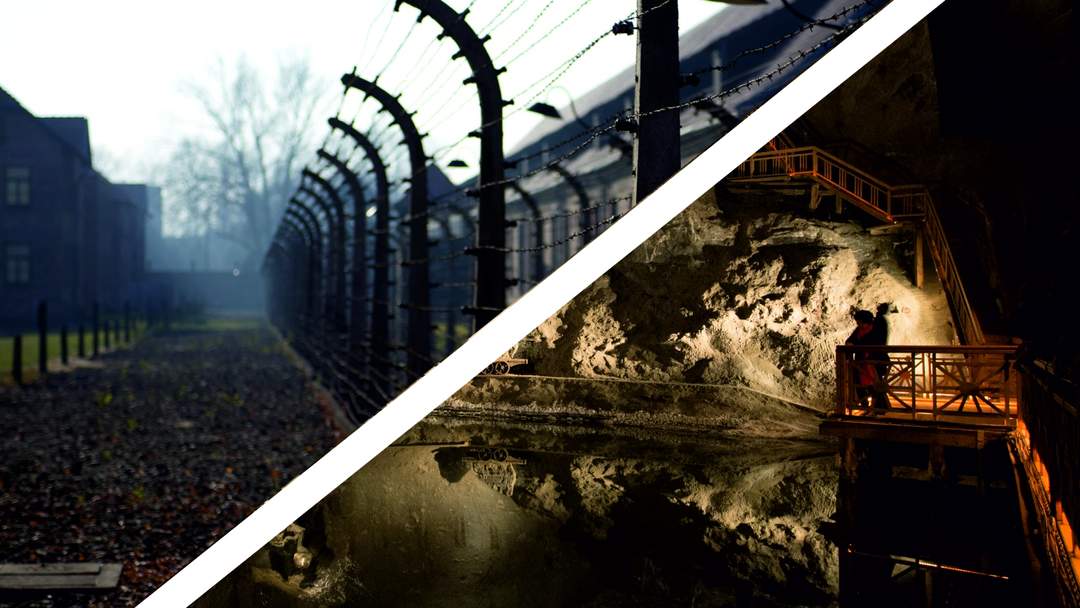
The First Prisoners of Auschwitz – What the First Days in the Camp Looked Like
May 22, 2025
On 14 June 1940, 728 Polish prisoners were deported to Auschwitz. Learn about the camp’s origins, first days, and why these stories still matter.
May 22, 2025
Auschwitz’s First Prisoners – Conditions in the Early Days
On 14 June 1940, the first mass transport of Polish political prisoners arrived at the newly established Nazi German concentration camp Auschwitz. The group of 728 men, mostly members of the Polish resistance, students, teachers, and scouts, was deported from a prison in Tarnów. This date marks the beginning of the operation of Auschwitz as a concentration camp.
In this article, we explore what happened during those first days: who these men were, what they experienced upon arrival, and how their stories shaped the darkest chapter of modern European history.
Why Was Auschwitz Created?
The creation of Auschwitz was primarily a response to the overcrowding of prisons in German-occupied Poland, especially in the General Government and Upper Silesia, in late 1939 and early 1940. The Nazi authorities had arrested tens of thousands of Polish intellectuals, priests, teachers, civil servants, and anyone suspected of opposing the occupation. The existing prison infrastructure was overwhelmed.
In December 1939, SS officials in Wrocław proposed setting up a new concentration camp for Polish political prisoners. The abandoned Polish Army barracks in Oświęcim (renamed Auschwitz) were selected as the ideal location due to their solid infrastructure, existing fencing, isolation from civilian areas, and proximity to major rail lines.
But the goal of the camp went beyond logistics. Auschwitz was intended as an instrument of terror – to break the spirit of the Polish nation and suppress any potential for resistance. It was part of the broader Nazi plan to eliminate Polish leadership and turn the population into a slave labour force for the German Reich.
On 27 April 1940, Heinrich Himmler officially ordered the creation of the camp. SS officer Rudolf Höss was appointed as its first commandant.
Before the arrival of Polish prisoners, a group of 30 German criminals from Sachsenhausen was transferred to Auschwitz in May 1940. They received prisoner numbers 1 to 30 and were appointed as “functionary prisoners” (kapos), assigned to supervise and control incoming inmates.
14 June 1940: The First Mass Transport from Tarnów
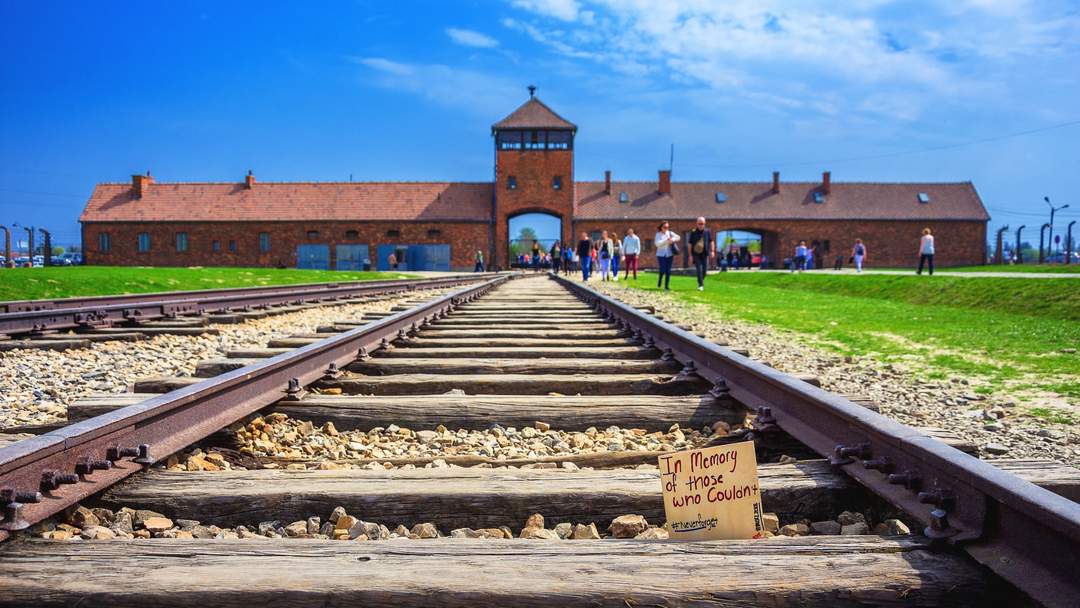
In the early morning of 14 June 1940, 728 men were marched out of a Jewish bathhouse (mykwa), where they had spent the night. Escorted by armed German police, they walked in silence through Wałowa and Krakowska Streets toward Tarnów railway station. Bystanders could only observe from their windows.
Most of the deported men had been arrested as part of the German AB-Aktion – a campaign targeting Polish intellectuals, teachers, resistance members, and scouts. The youngest prisoner was only 16 years old.
They were loaded into third-class railway cars, twelve men per compartment, and transported without knowing their destination. Upon arrival at Auschwitz, they became prisoners numbered 31 to 758.
Więźniowie polityczni na dworcu w Tarnowie, przed przewiezieniem do Auschwitz, 14 czerwca 1940 r. IPN/Wikipedia, domena publiczna
Arrival and Registration
Once in the camp, the men underwent a dehumanising registration process. Their personal belongings were confiscated, their heads and bodies shaved, and their clothing disinfected. They were assigned numbers in place of names.
SS officer Karl Fritzsch addressed them with chilling clarity:
“You have not come to a sanatorium, but to a German concentration camp. There is only one way out – through the chimney. If there are Jews in this transport, they are allowed to live no more than two weeks, priests one month, the rest three months.”
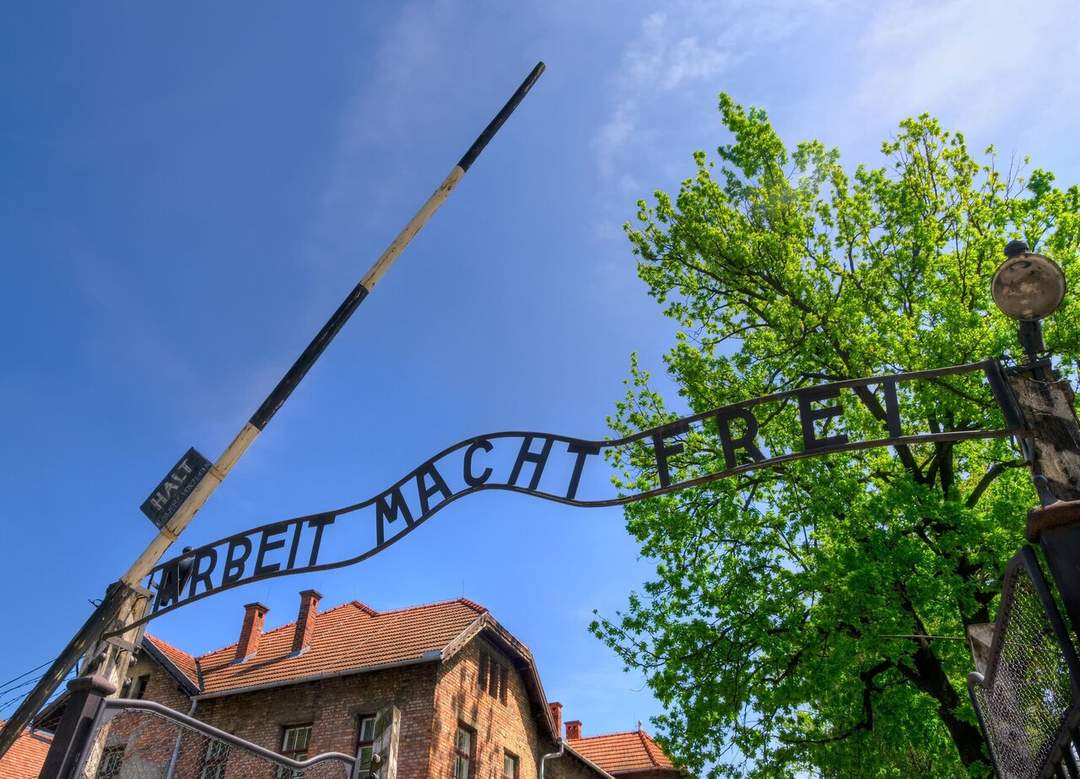
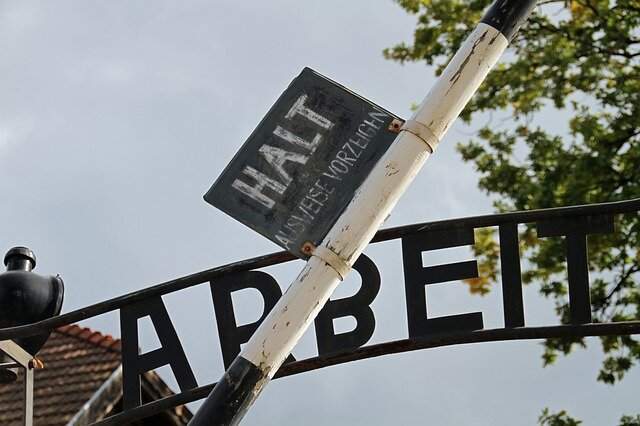
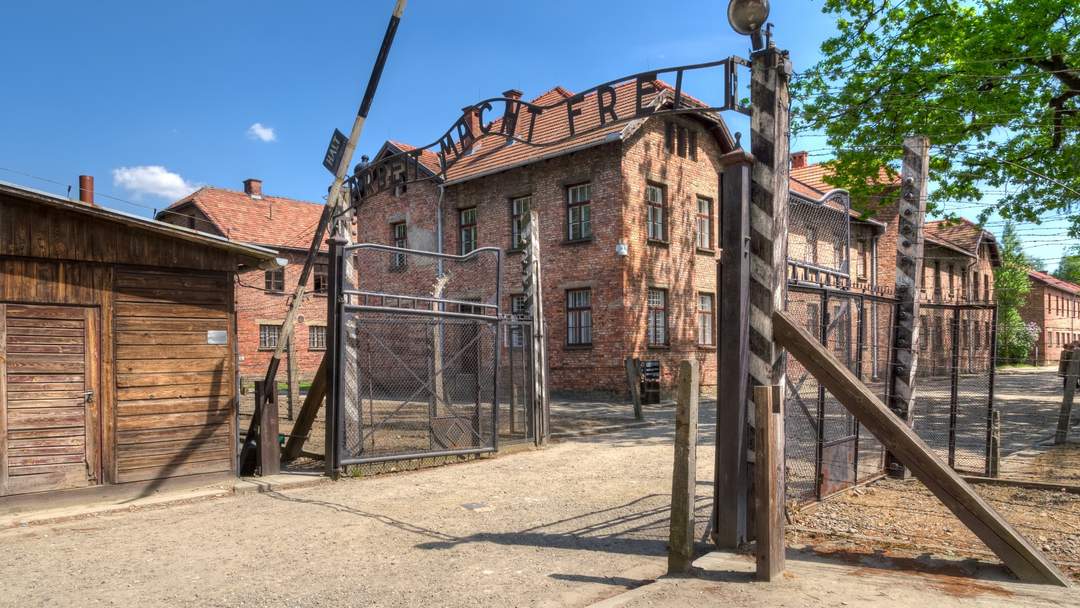
One of the most chilling symbols of Auschwitz was the inscription “Arbeit macht frei” (“Work sets you free”) placed above the entrance gate. This sign was forged in the camp’s metal workshop by some of the first prisoners, under SS orders. Read more about the gate and its symbolic cruelty here: Gates of Hell? Learn more about the gate of Auschwitz I
Camp Life and ‘Quarantine’
Starting 15 June, the prisoners endured a brutal “quarantine” meant to break them physically and mentally. They were forced to perform exhausting exercises, sing German military songs, and follow strict camp routines. Older men and priests were singled out for beatings. Kapo prisoners – many of whom were hardened criminals – often proved more brutal than the SS guards.
The First Escape and the First Death
On 6 July 1940, Tadeusz Wiejowski became the first person to escape from Auschwitz, aided by five Polish civilians. The SS responded with a brutal 20-hour roll call, during which Dawid Wongczewski – a Jewish prisoner – collapsed and died. Wiejowski was later captured and executed in 1941.
Walk in the footsteps of history on a professionally guided visit to Auschwitz-Birkenau – one of the most important memorial sites in the world. Departing from Krakow, this all-inclusive tour offers powerful insight, respectful reflection, and seamless logistics, so you can focus on what truly matters. Led by a licensed guide, you'll visit both Auschwitz I and Auschwitz II-Birkenau and return with a deeper understanding of the past. Whether travelling solo or with others, this tour is trusted by thousands every year for its emotional impact and flawless organisation.
Duration: 7hLive guideSkip-theLineTransportation included
Secure your skip-the-line entry to the Auschwitz-Birkenau Memorial and Museum and take part in an official guided tour led by a licensed museum educator. This is a unique opportunity to reflect on history in a respectful setting. Skip-the-line tickets are ideal for visitors who prefer to travel to the site independently and join the guided group on location.
Duration: 4hLive guideSkip-theLineTransportation included
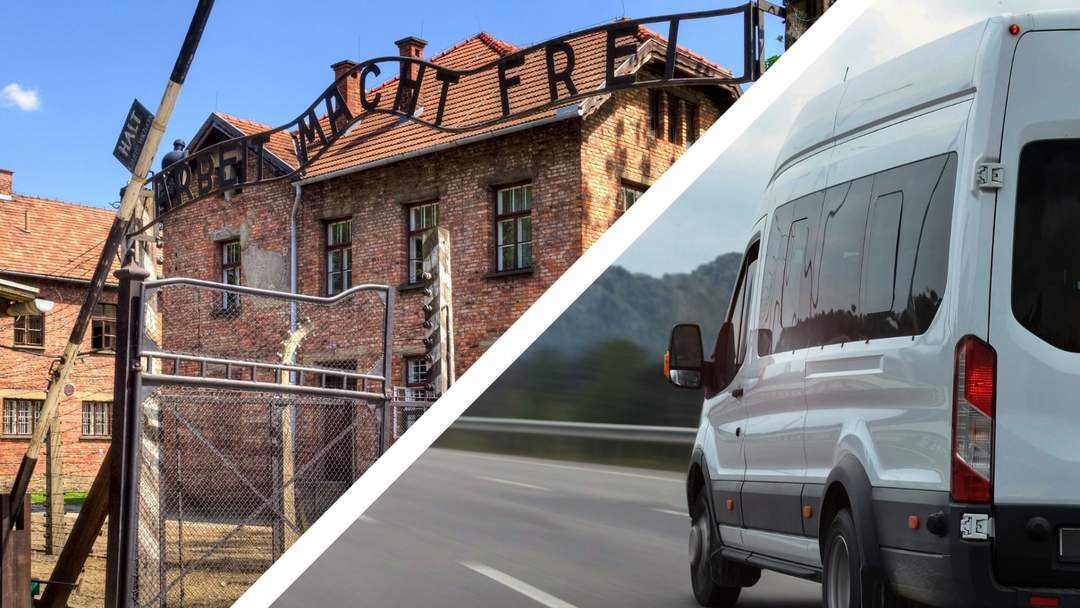
Book a private transfer from Krakow to Auschwitz-Birkenau Memorial and Museum and travel comfortably without worrying about public transport or fixed timetables. Choose between one-way transport or a round-trip option with the driver waiting on site.
The first transport to Auschwitz, which arrived from Tarnów on 14 June 1940, included 728 men – mostly young Poles. Among them were scouts, teachers, students, clerks, members of the resistance, and men arrested while attempting to reach Polish military units abroad. Their stories have become symbols of courage and suffering, though many names remain little known. Here are some of them:
Stanisław Ryniak (no. 31) – the first officially registered political prisoner of Auschwitz. A student of construction engineering, he was arrested by the Gestapo in Jarosław. After the war, he became an architect. He died in Wrocław in 2004.
Bronisław Czech (no. 349) – an Olympian and skiing champion from Zakopane, known as a Tatra courier who carried messages across the border. He died in Auschwitz in 1944.
Wiesław Kielar (no. 290) – a film student and author of one of the most important Auschwitz memoirs: Anus Mundi. After the war, he became a film cameraman.
Julian Gazda (no. 337) – a legionnaire and officer of the Polish Army, arrested in Rudnik nad Sanem. After Auschwitz, he was transferred to Mauthausen. He survived the war.
Zbigniew Kruszelnicki (no. 143) – a young underground fighter and later commander of the AK partisan unit “Wilk”. He continued his independence activity after the war.
Kazimierz Zając (no. 261) – the youngest known prisoner in the first transport to Auschwitz. Born on 19 December 1923 in Jasień near Brzesko, he was 16 years old at the time of deportation. In 1944, he was transferred to the Buchenwald camp, where he was liberated. After the war, he studied in Kraków, worked in the Okocim brewery, and lived in Brzesko until his death. He passed away on 8 April 2018 at the age of 94.
Ignacy Płachta (no. 758) – the last prisoner registered in the first transport. In 1944, he was transferred to the Sachsenhausen concentration camp. He survived the war, but his later fate remains unknown.
According to research by the Auschwitz-Birkenau State Museum, at least 325 of the 728 men from the first transport survived the war. The stories of many others still await discovery and remembrance.
Why These Stories Matter
The first prisoners of Auschwitz are often overshadowed by the later history of genocide. But their suffering marked the beginning of the terror that the camp would come to represent. Learning their names and fates helps us understand how political repression evolved into mass extermination.
Their legacy is a warning – and a reminder of dignity in the face of cruelty.
Commemorations and Visiting
14 June has been designated by the Polish parliament as the National Day of Remembrance for Victims of Nazi German Concentration Camps and Extermination Camps. The date marks the anniversary of the first mass deportation to Auschwitz.
Walk in the footsteps of history on a professionally guided visit to Auschwitz-Birkenau – one of the most important memorial sites in the world. Departing from Krakow, this all-inclusive tour offers powerful insight, respectful reflection, and seamless logistics, so you can focus on what truly matters. Led by a licensed guide, you'll visit both Auschwitz I and Auschwitz II-Birkenau and return with a deeper understanding of the past. Whether travelling solo or with others, this tour is trusted by thousands every year for its emotional impact and flawless organisation.
Duration: 7hLive guideSkip-theLineTransportation included
Maximize your time in Krakow with our specially curated 1 day tour, combining the essential visits to Auschwitz-Birkenau and Wieliczka Salt Mine. This one day adventure offers you a chance to experience two of Krakow's most significant and must-see locations: the historical Auschwitz Camp and the mesmerizing Salt Mine in Wieliczka. Our well organized tour ensures you don't miss out on what these sites have to offer, making your visit truly worthwhile. Book now to discover the best of Krakow in just one day trip!
Duration: 11hLive guideSkip-theLineTransportation included
Secure your skip-the-line entry to the Auschwitz-Birkenau Memorial and Museum and take part in an official guided tour led by a licensed museum educator. This is a unique opportunity to reflect on history in a respectful setting. Skip-the-line tickets are ideal for visitors who prefer to travel to the site independently and join the guided group on location.
Duration: 4hLive guideSkip-theLineTransportation included
Book a private transfer from Krakow to Auschwitz-Birkenau Memorial and Museum and travel comfortably without worrying about public transport or fixed timetables. Choose between one-way transport or a round-trip option with the driver waiting on site.








 Duration: 7h
 Live guide
 Skip-theLine
 Transportation included